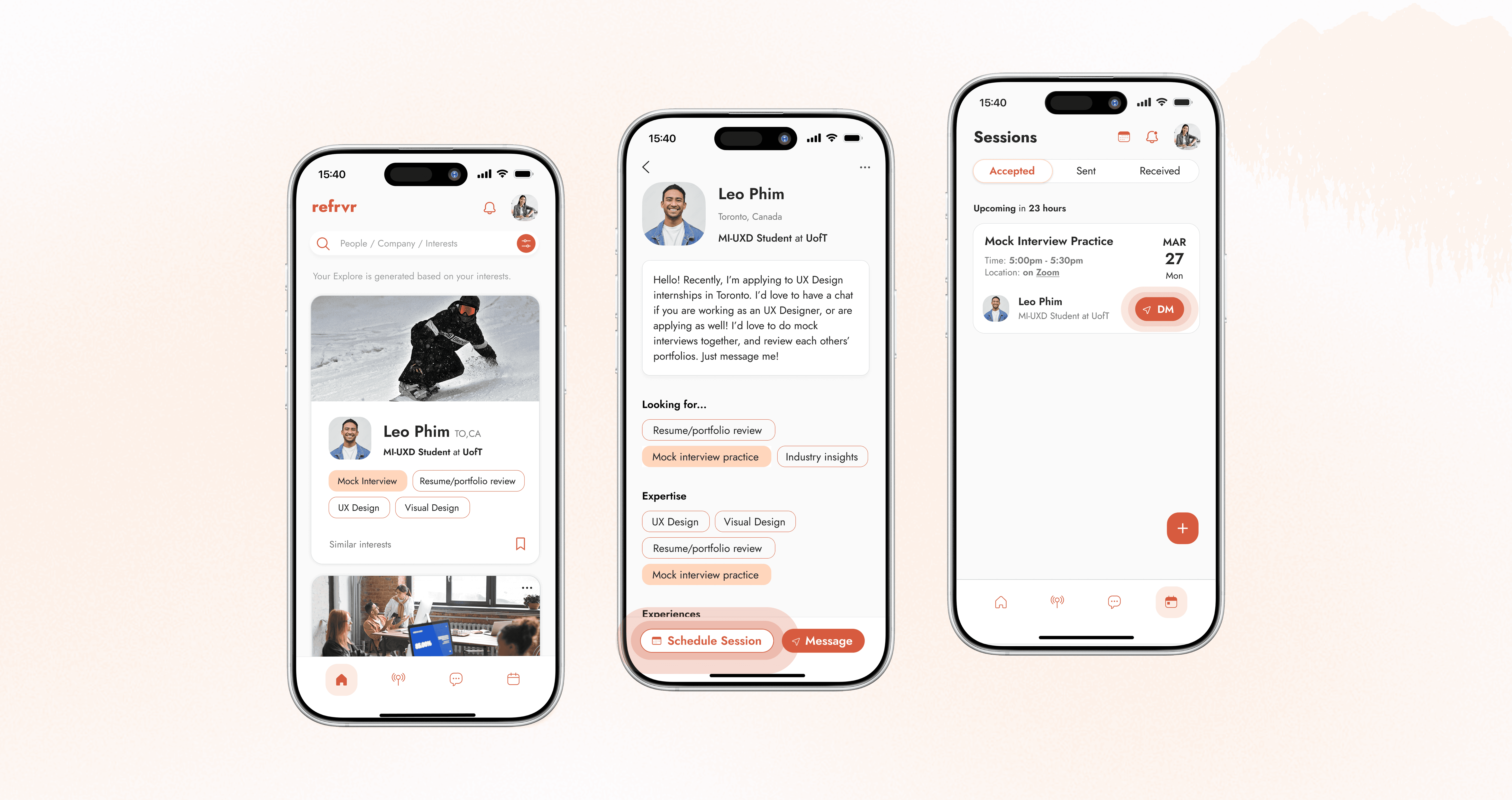
Refervor
A mobile app that reimagines mentorship via a curated peer-network that leverages users' expertise.
Type
BrainStation Course Work
Time
6 Weeks
(2025 Feb-Mar)
Team
Solo Project
Role
Comparator/User Research & Analysis,
Wireframing, Prototyping & UI Design
As a response to the competitive job market, the internet filled with noise, and the anxieties myself and my friends have had about our career decisions post-graduation, I designed Refervor. It is a social platform that helps students explore alternative perspectives and opportunities via a curated peer-network.
It was completed as part of the course work when I took the UXD class at Brainstation in February 2025. I was the sole UX/UI designer.
The Problem
Navigating career decisions in a fierce job market filled with noise and slop is an isolating and stressful experience for new grads.
Solution
A curated network that connects peers with mutual curiosities and different expertise to "ungatekeep" possible career paths.
Setting up your profile for smoother matching
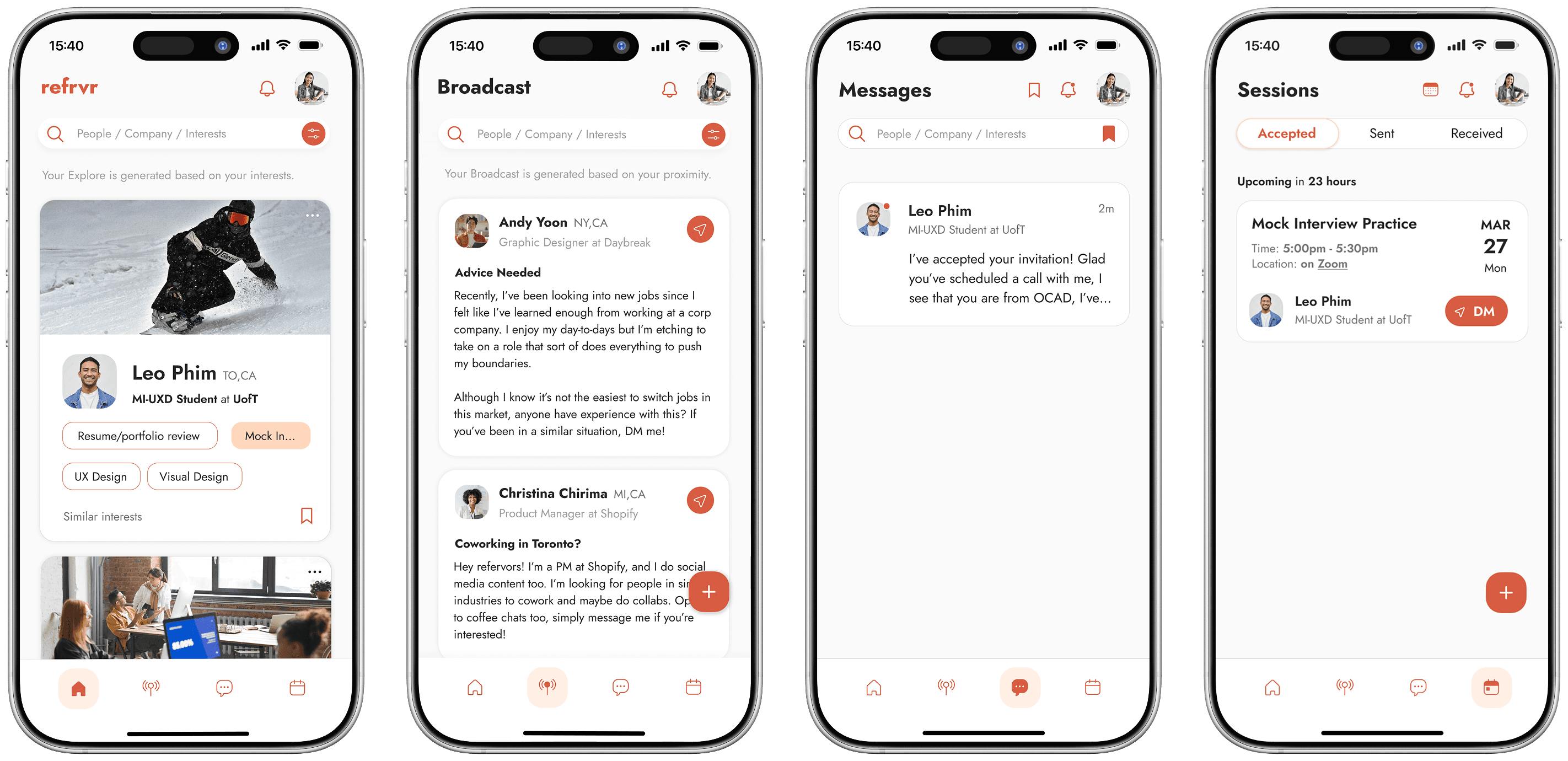
During the registeration process, the user is prompted to enter their current title, experience, expertise (soft skills and tools), and professional interests to help them find matching profiles.
Scheduling a session with ease from your feed
From the home page, you can explore profiles that match with your professional interests at a glance. Within their profiles, you can easily message or schedule an session with them based on what the user has set up.
Following up after scheduling the call
Message them before or after scheduling a session with them… Or simply wait until they accept your request! In the Sessions tab, you can check on all requests you've sent, ones that has been accepted, as well as incoming requests that you've received from others.

initial observations
After speaking to 12 new grads across 9 industries in Toronto and San Francisco, I found out that everyone is overwhelmed by career path decisions.
In the year we graduated from University, the mutual struggles me and my classmates used to share diverged into problems unique to our own. Through casual conversations with new grads either continuing their studies or working, I learned that everyone felt isolated and stressed even with the resources and network they had.

Market Research
I scoured the internet to see what users currently use when they seek help in making informed career decisions.
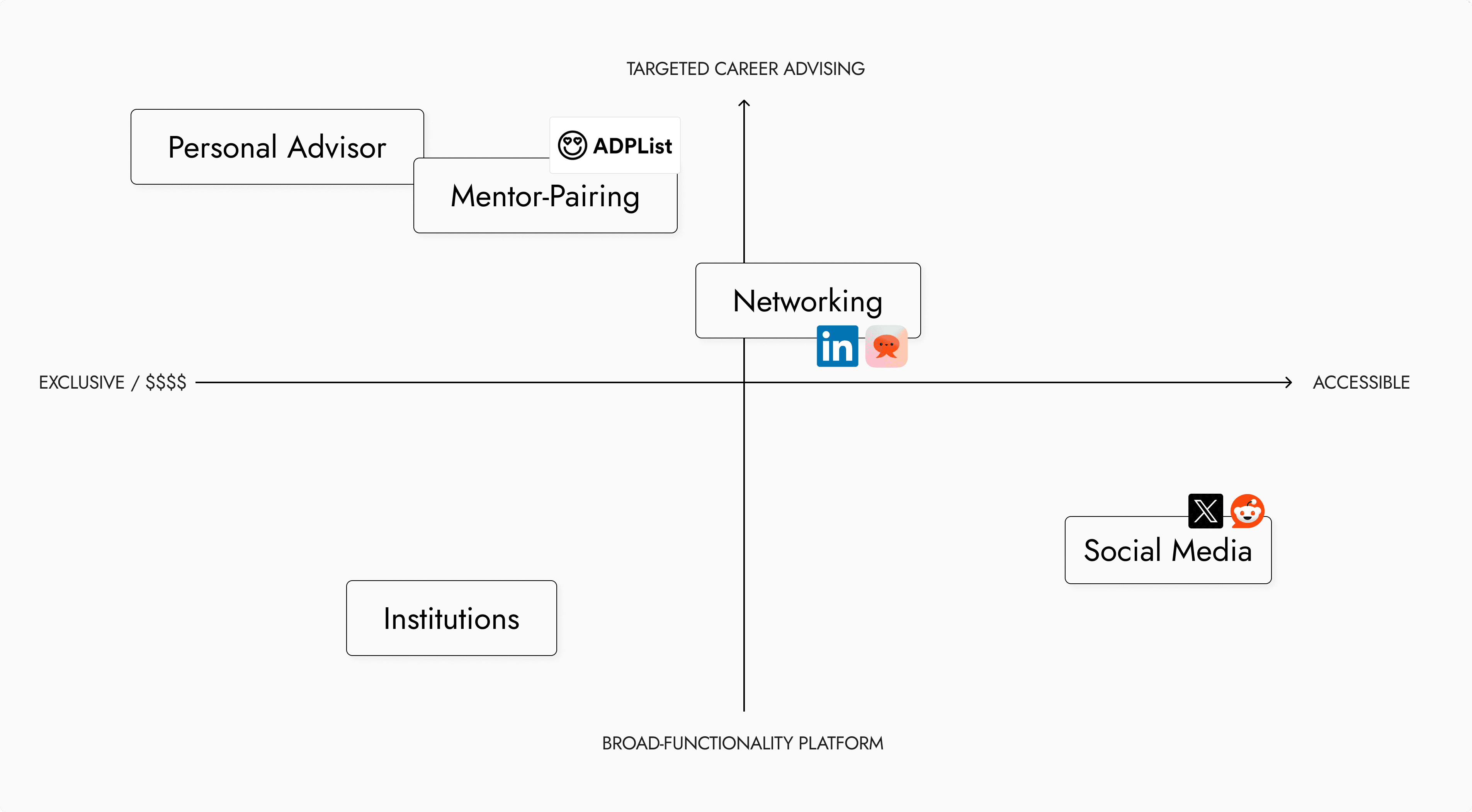
As a new graduate myself, I dug into all of the possible channels for this comparative analysis. While many of them are rich sources of information, the effort needed to get any productive career advice is either costly in money or time. With this, I knew my product can fill the gap in the market by providing accessible & targeted career advising.
User INterviews
To dive deeper into my users' perspectives, I conducted interviews with 9 new grads with creative or STEM backgrounds, age 22-25.
The objective is to understand how participants currently approach finding and building professional connections, the tools and methodologies they use, and their motivation and frustrations associated with these processes.
Selective Interview Questions
What do you consider your personality to be? i.e. Are you extroverted or introverted?
Can you tell me about your most valuable professional connection?
How did you meet them?
Is there ever a time, if at all, you found seeking advice was unsuccessful? What happened?
What makes you comfortable or uncomfortable when asking others for help?
Key Insights
When it comes seeking career-related advice, networking is the number one solution. but extroverts and introverts have slightly different frustrations.
4 extroverts expressed…
Time wasted on getting ghosted
Cold messaging has a ~15% success rate on average, but there is no better way.
4 participants received…
Impersonal advice from network
The advice they got from their connections feel "generic and not really helpful".
All 4 introverts expressed…
Awkwardness as a barrier
The anticipated awkwardness of texting and/or speaking to someone stops them from reaching out in the first place.
3 participants felt that…
Uncertainty blocks action
Fear of getting ghosted, and/or being an annoyance to others hinders them from reaching out to strangers online.
User Personas
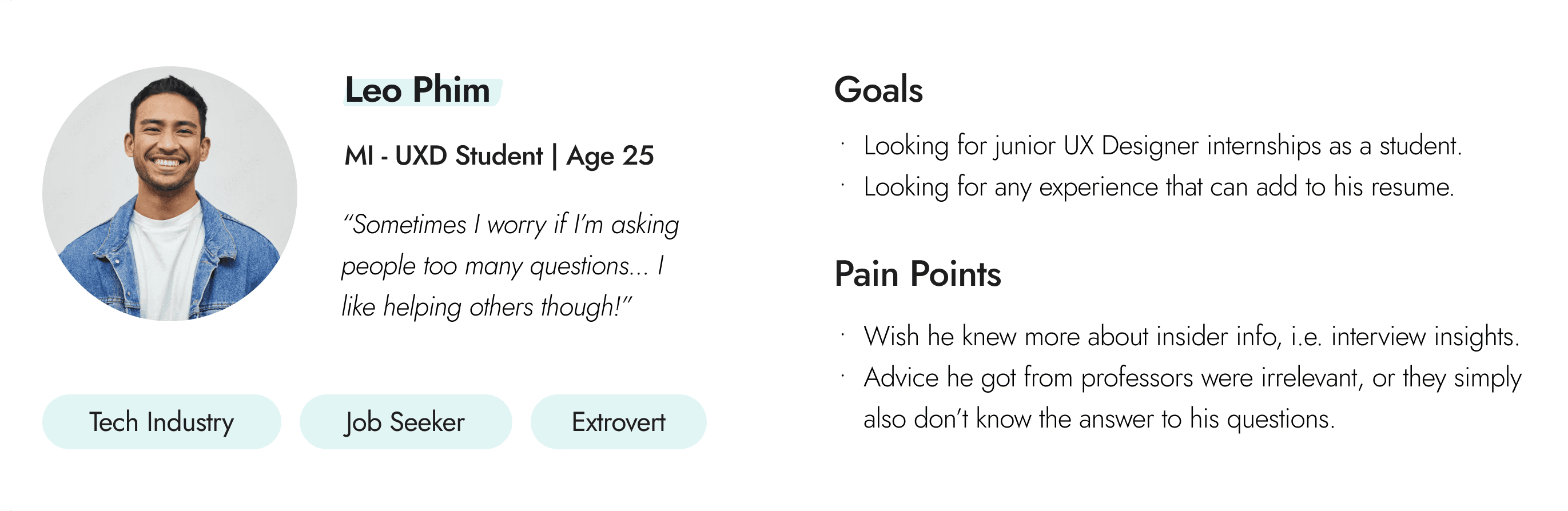
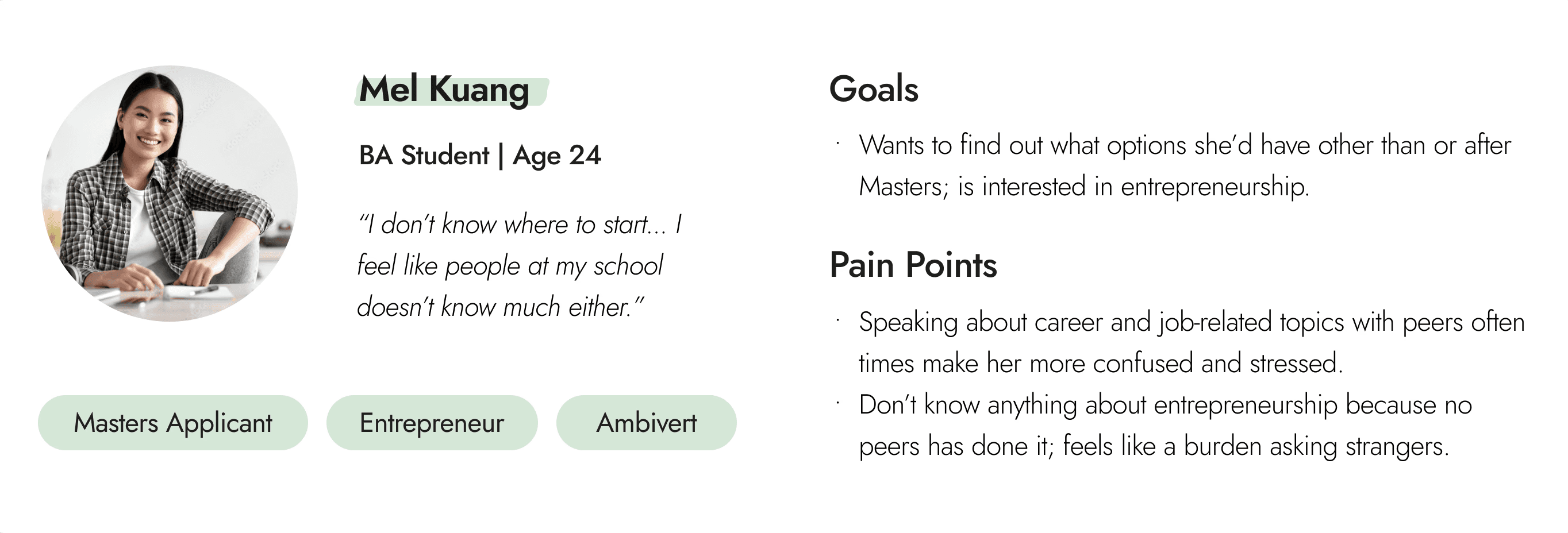
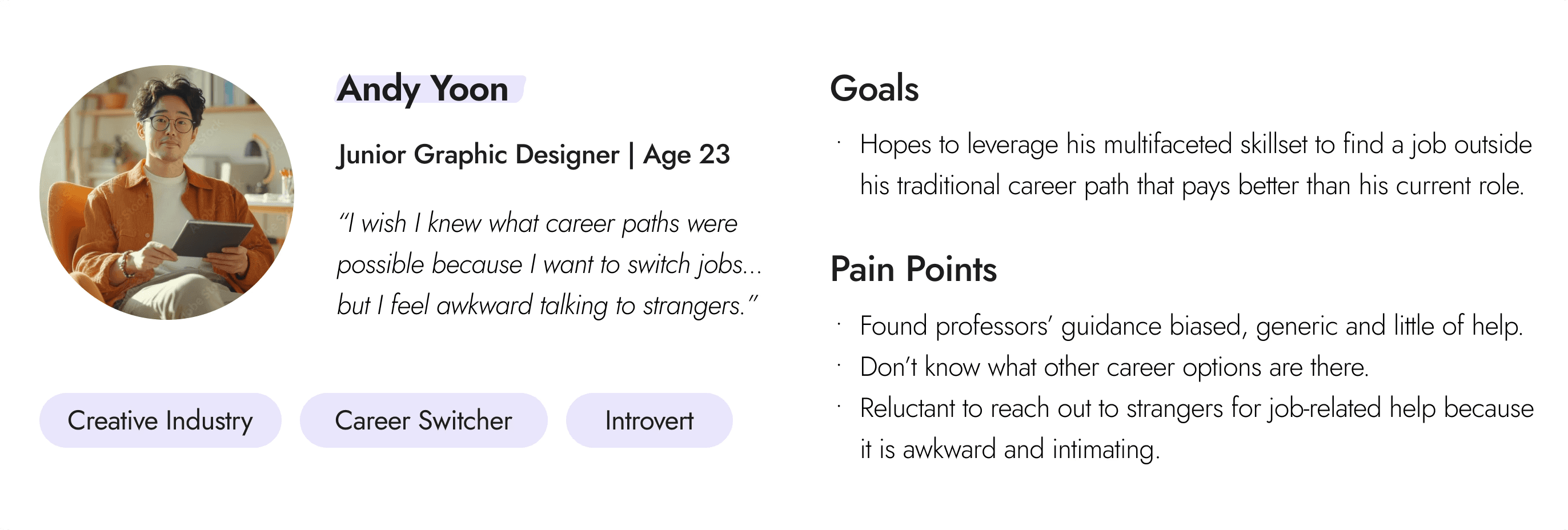
Based on these insights, I created 3 personas to capture the various career-advising approaches, professional interests, and pain points.
The Challenge
How might we support productive networking, and help new grads make informed career decisions with targeted and relevant advice?
High-Level Goals
These 4 aspects anchor the product scope and drive all decision-making. Features are prioritized based on how strongly they support these goals.

Prioritize experience > seniority
Profiles highlight expertise over position title to focus on experience-based conversations. Peers who are just one step ahead are often more accessible & helpful than senior execs.

Mutual mentorship
Offering and seeking help can coexist within one profile; users can be both a mentor and mentee. Everyone has something to offer, making mentorship feel less intimidating.

Credentials and vibes check
Help build trust and credibility using formal and informal information, and to to support users' objective and subjective evaluation.

Different ways to engage
Users can engage with others on the platform via 1-on-1s or communal forums, be it in-person meetups, calls, or messages.
Information Architecture
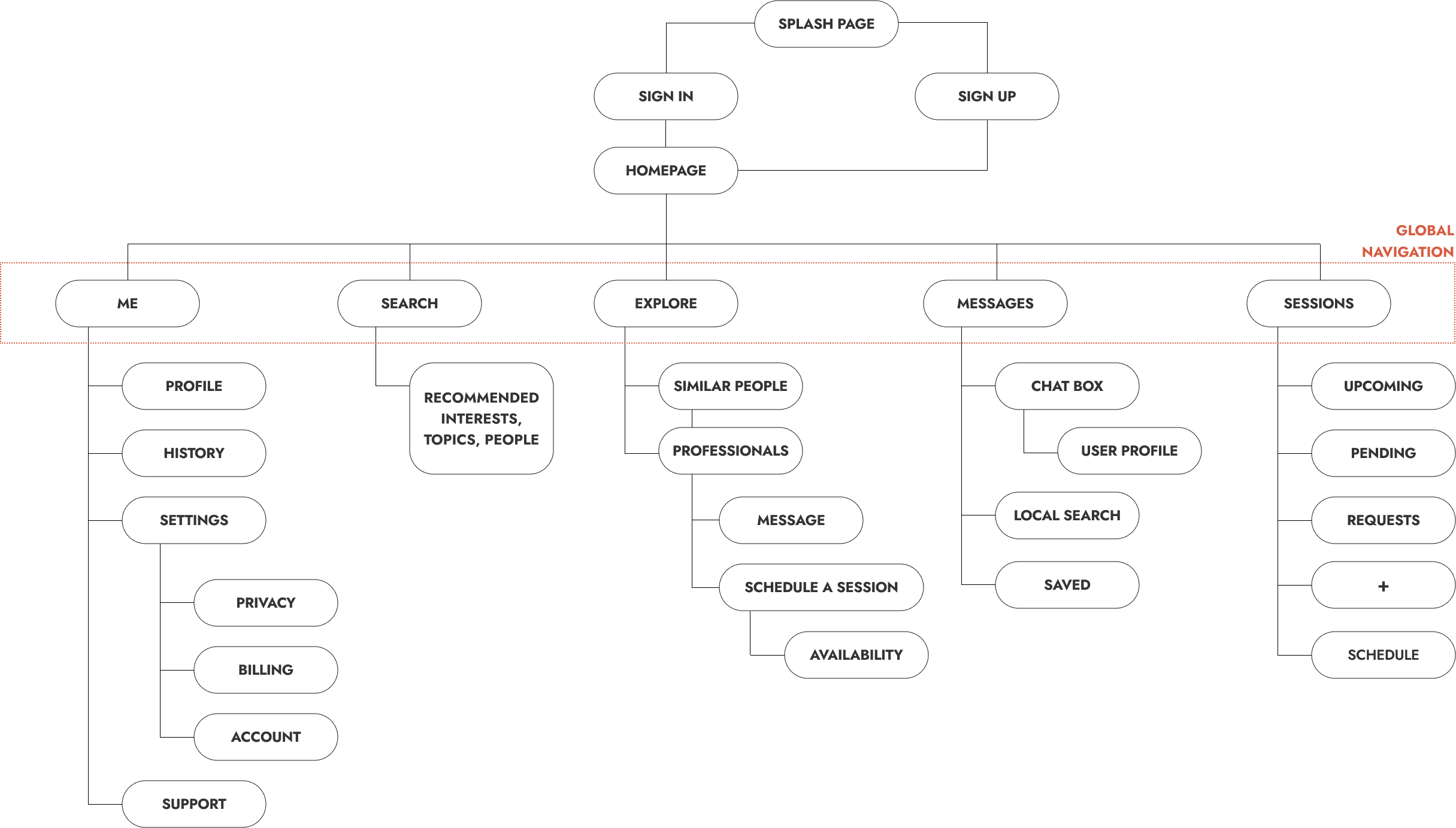
Information Architecture of Mobile App
User Flows
Using Mel as my example user, I imagined the journey she'd take to find someone for relevant career advice — starting from profile creation.
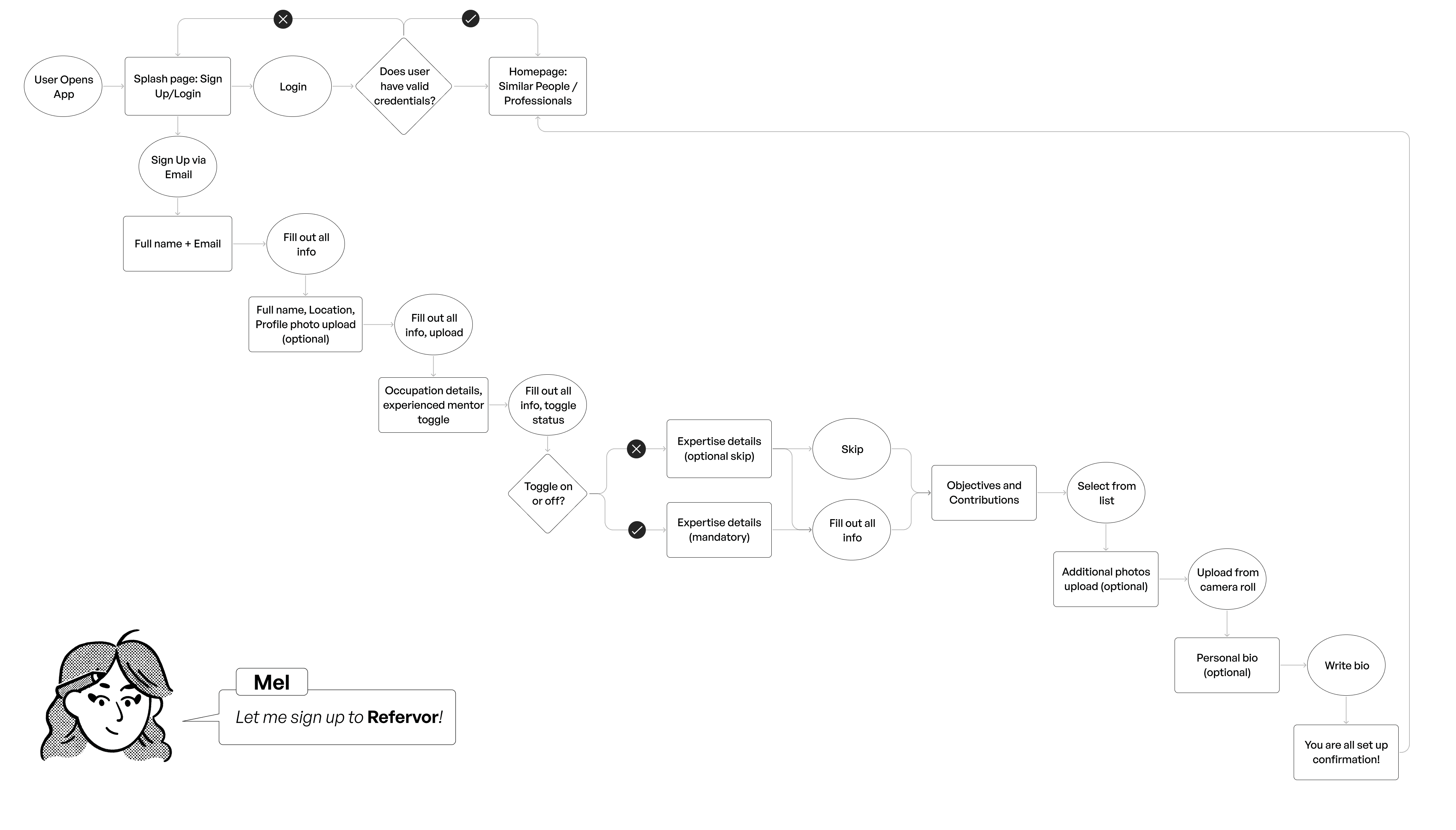
Task Flow: First-Time User Sign-Up
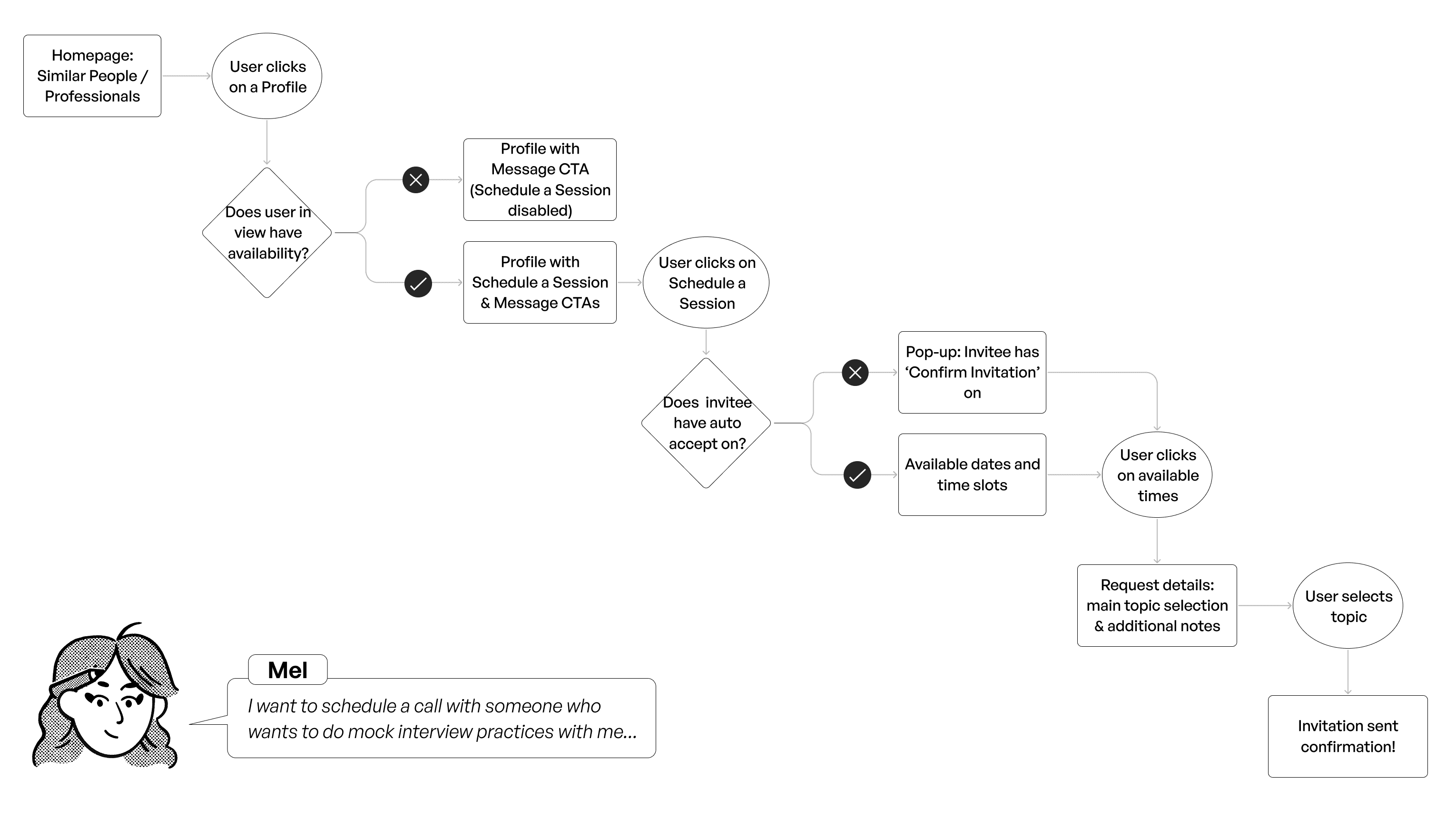
Task Flow: Scheduling a Call from Explore Page
Rapid Wireframing
I kicked off wireframing with 45-second sketches to quickly evaluate different UIs.
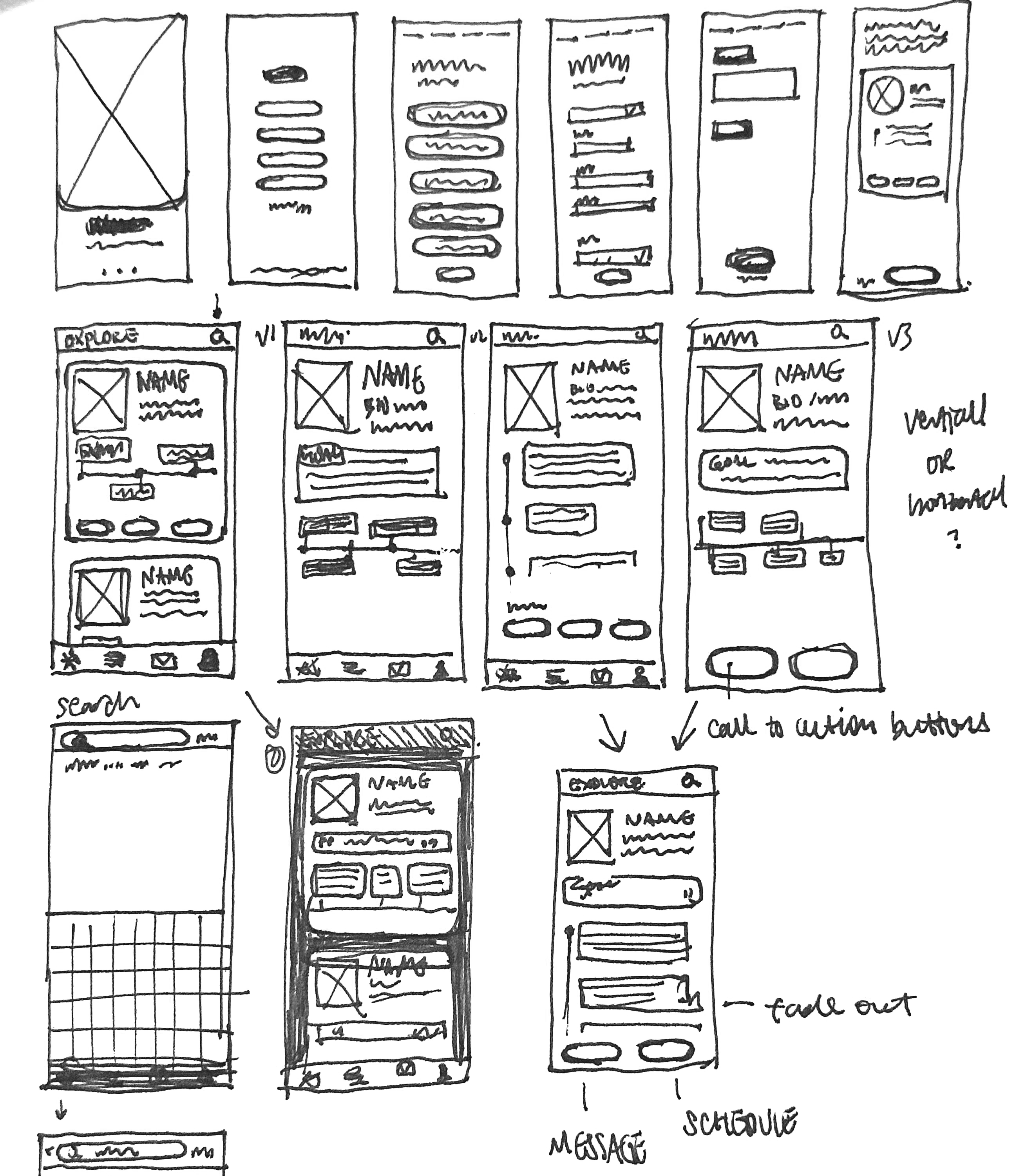

45-Sec Hand-Sketches of Low-Fi Wireframes
Usability Testing
To validate the user experience, I conducted 6 usability tests. With their feedback, I iterated the mid-fidelity wireframes into their final designs.
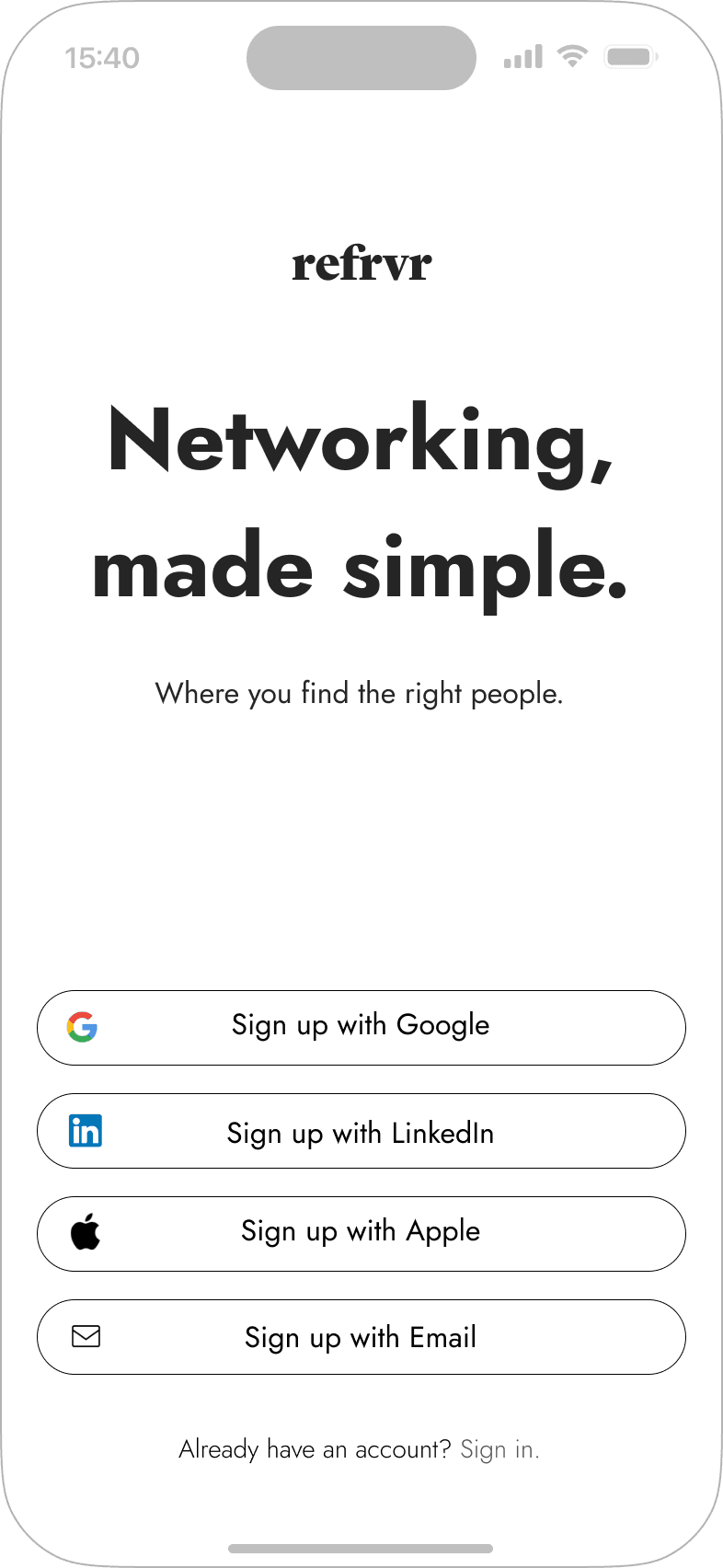
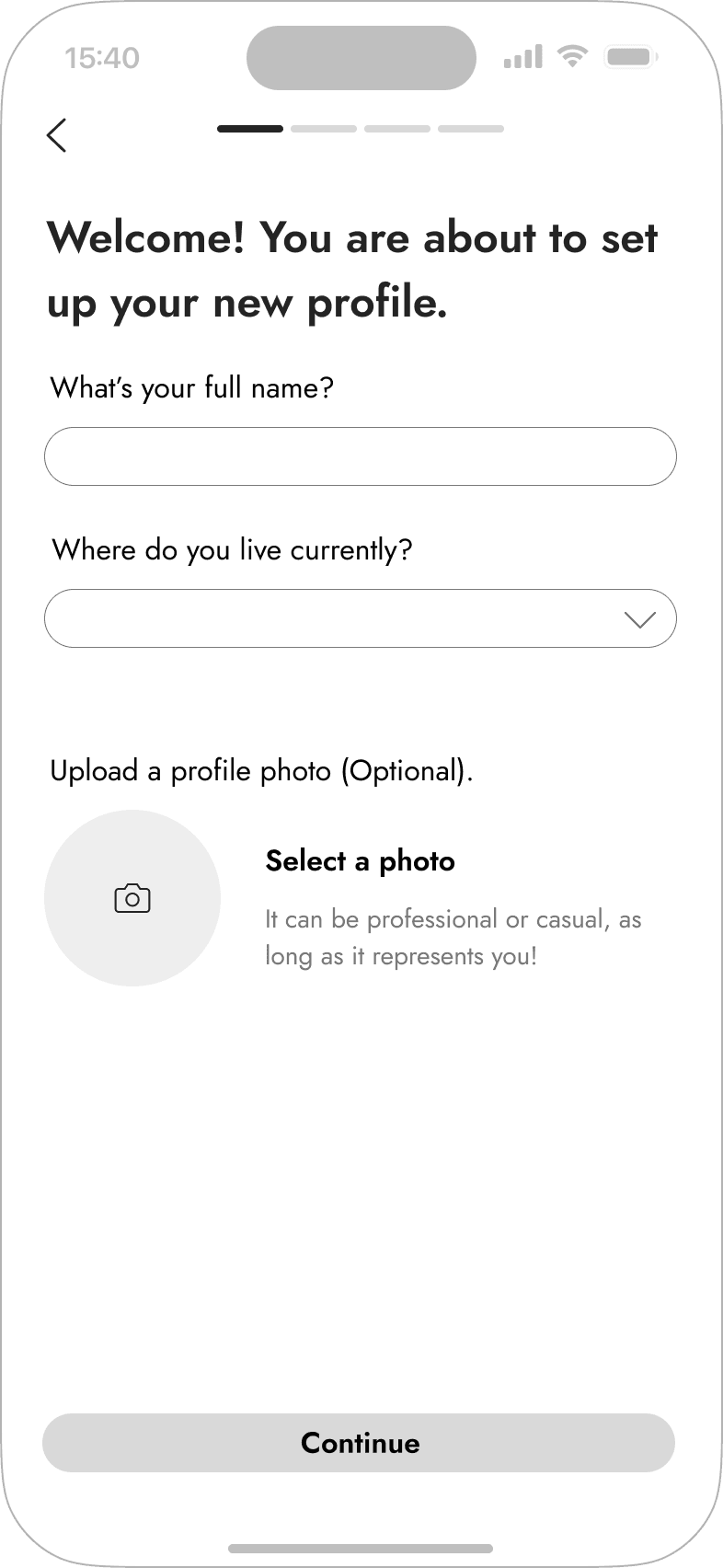
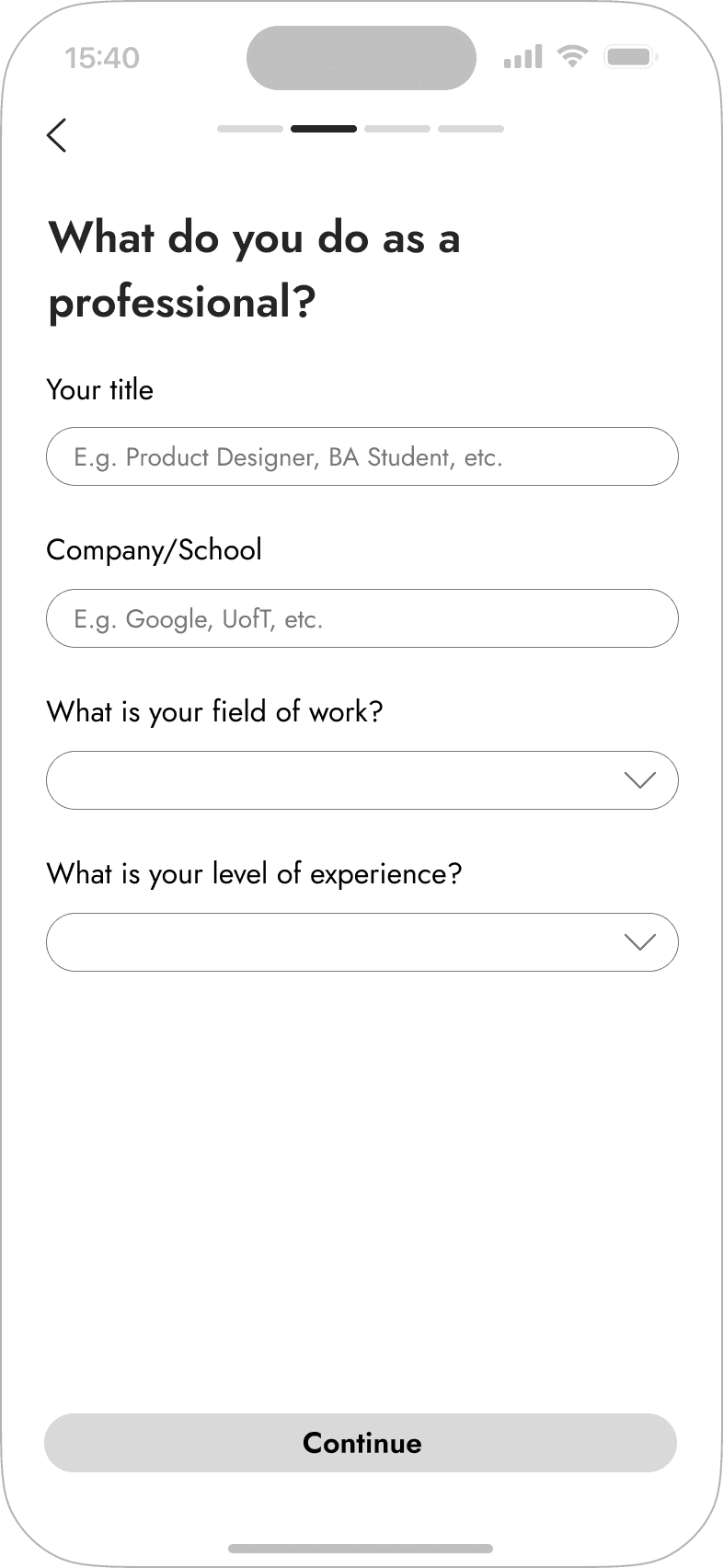
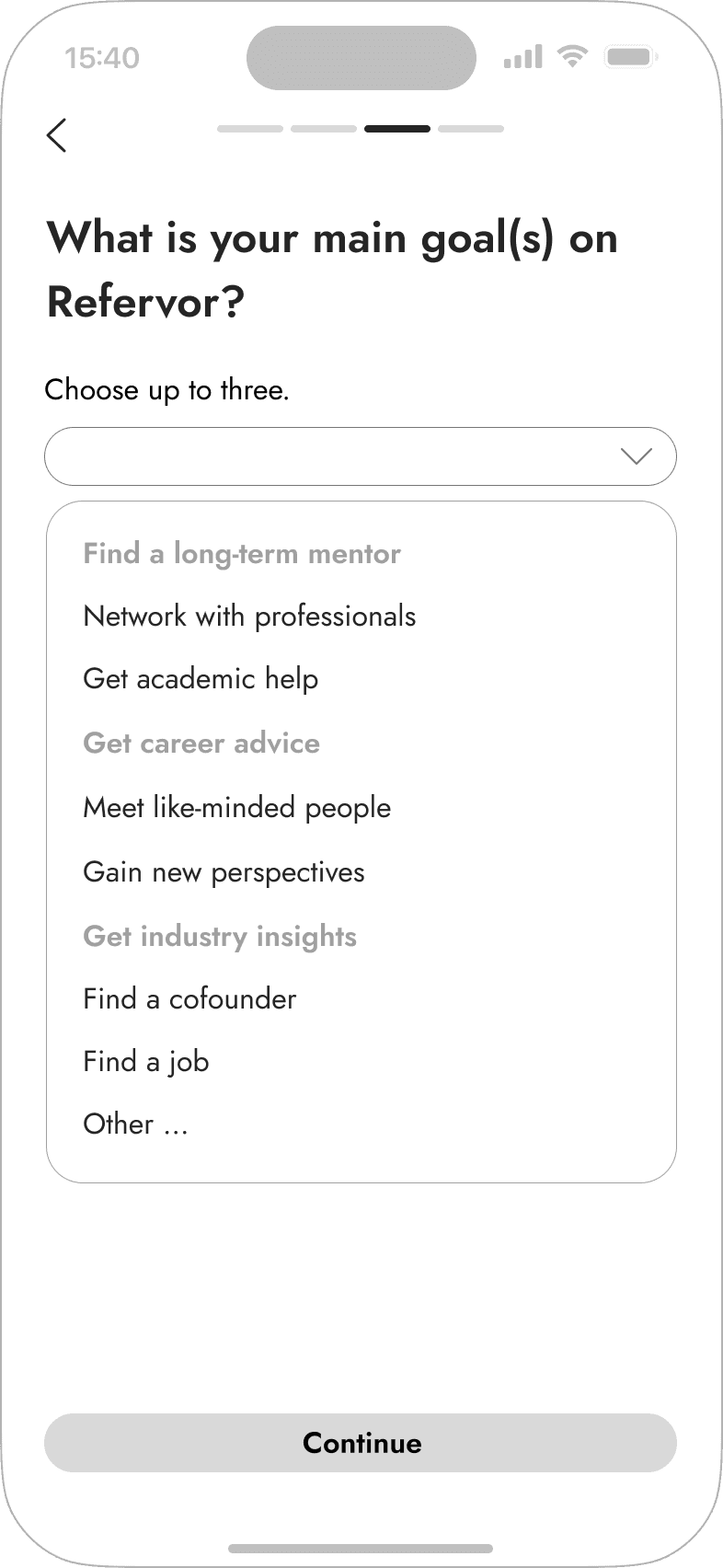
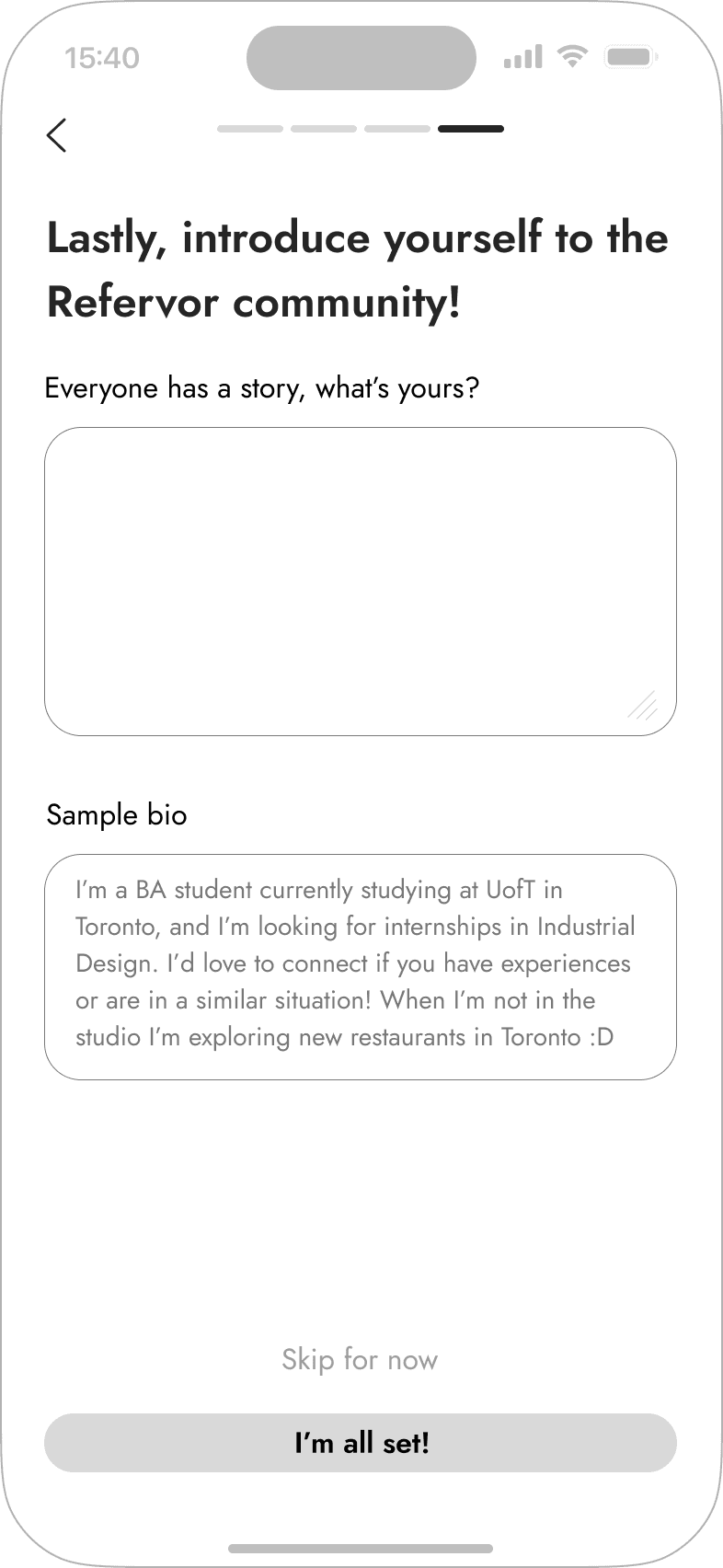
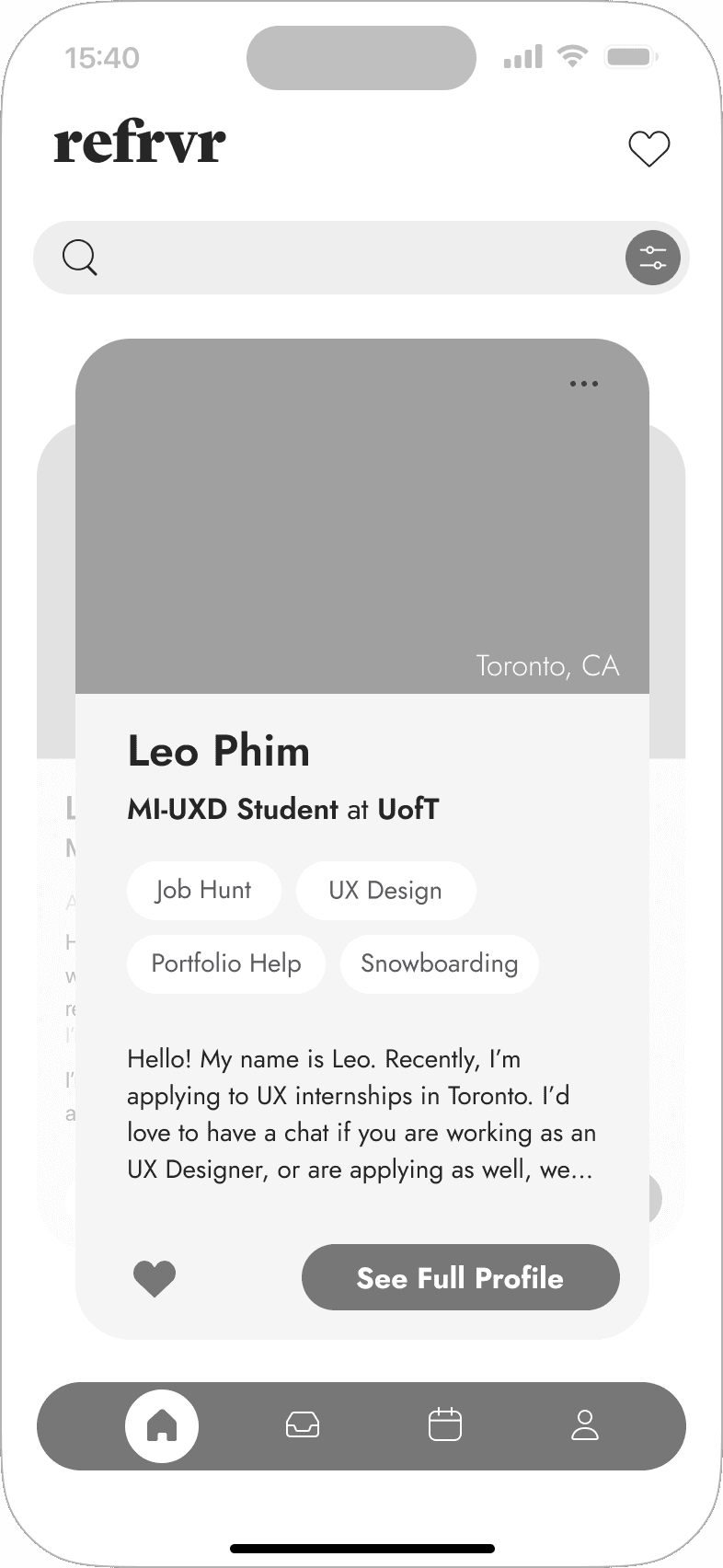
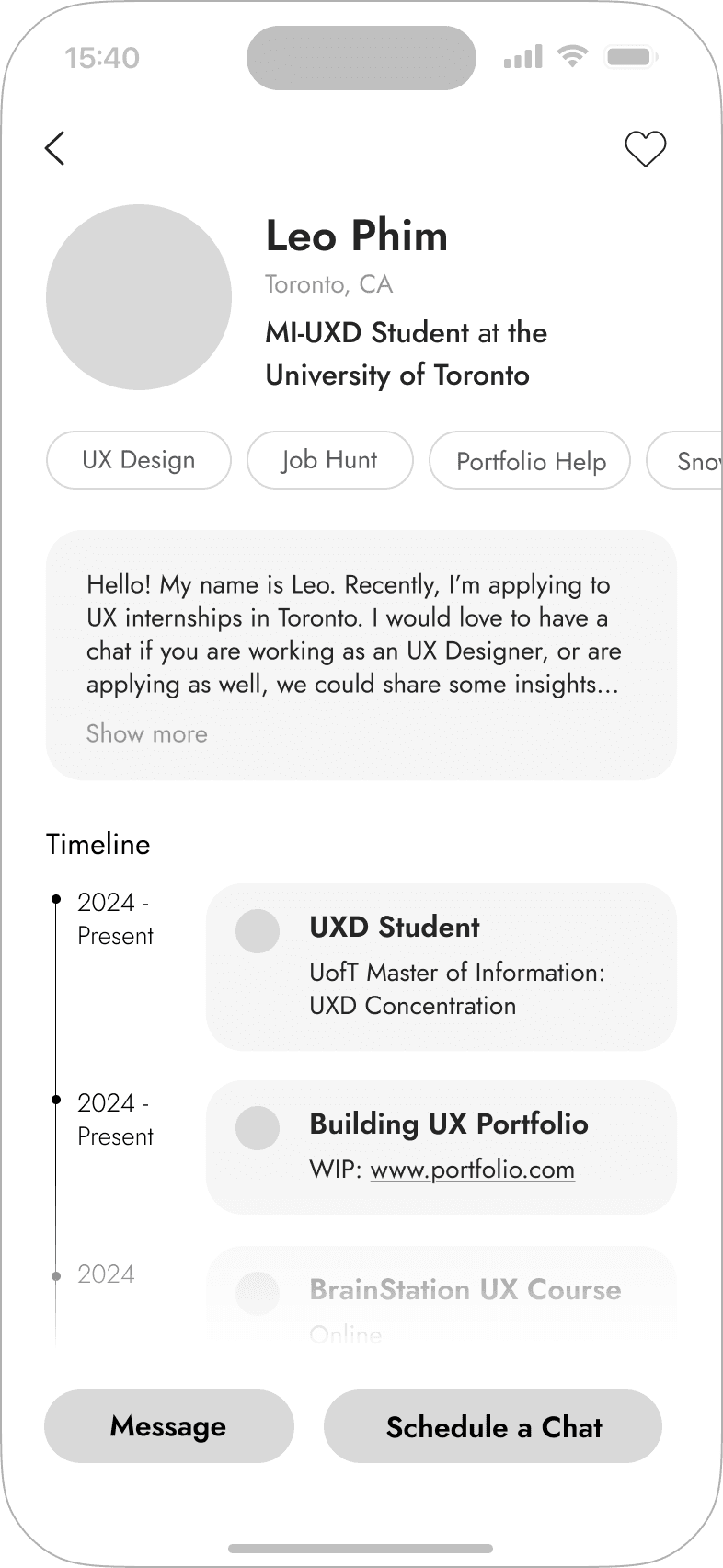

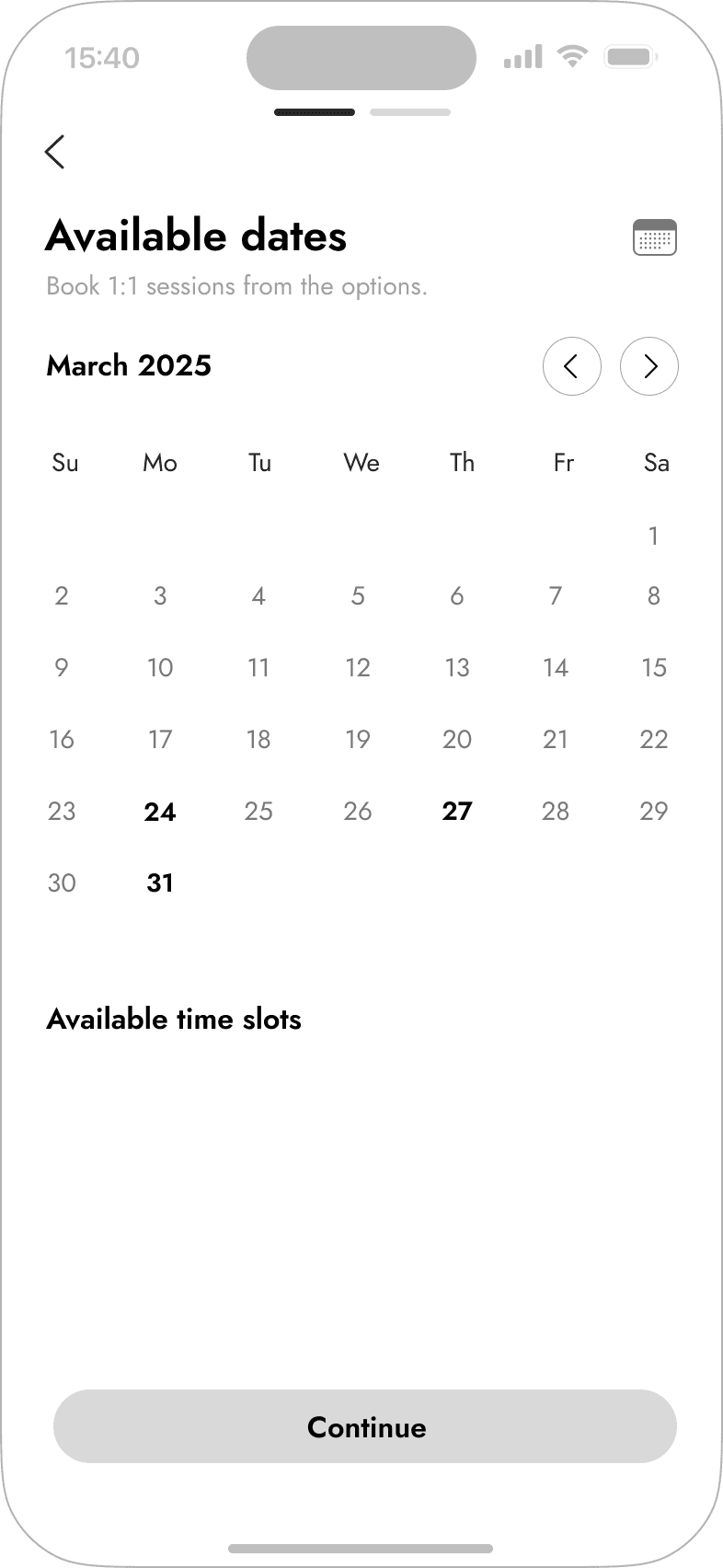
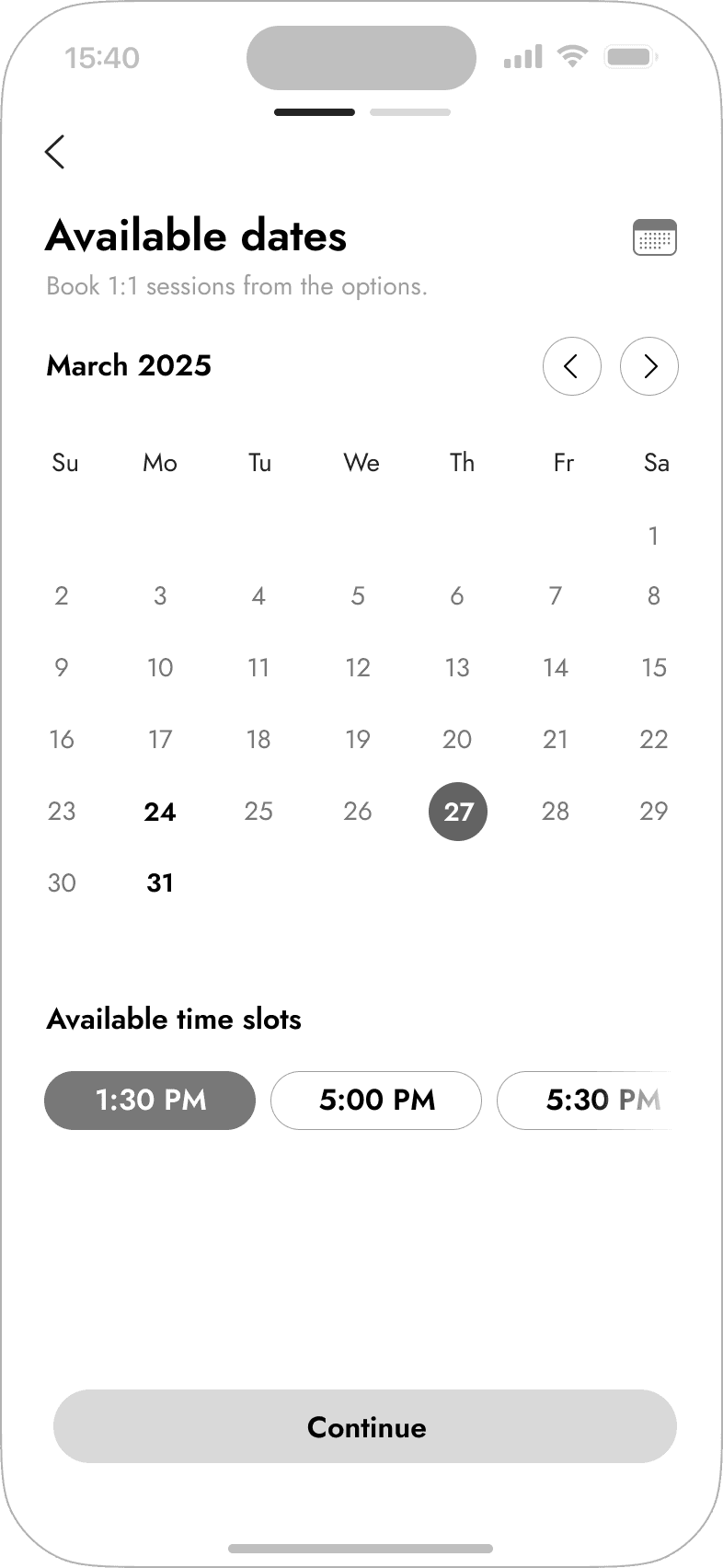
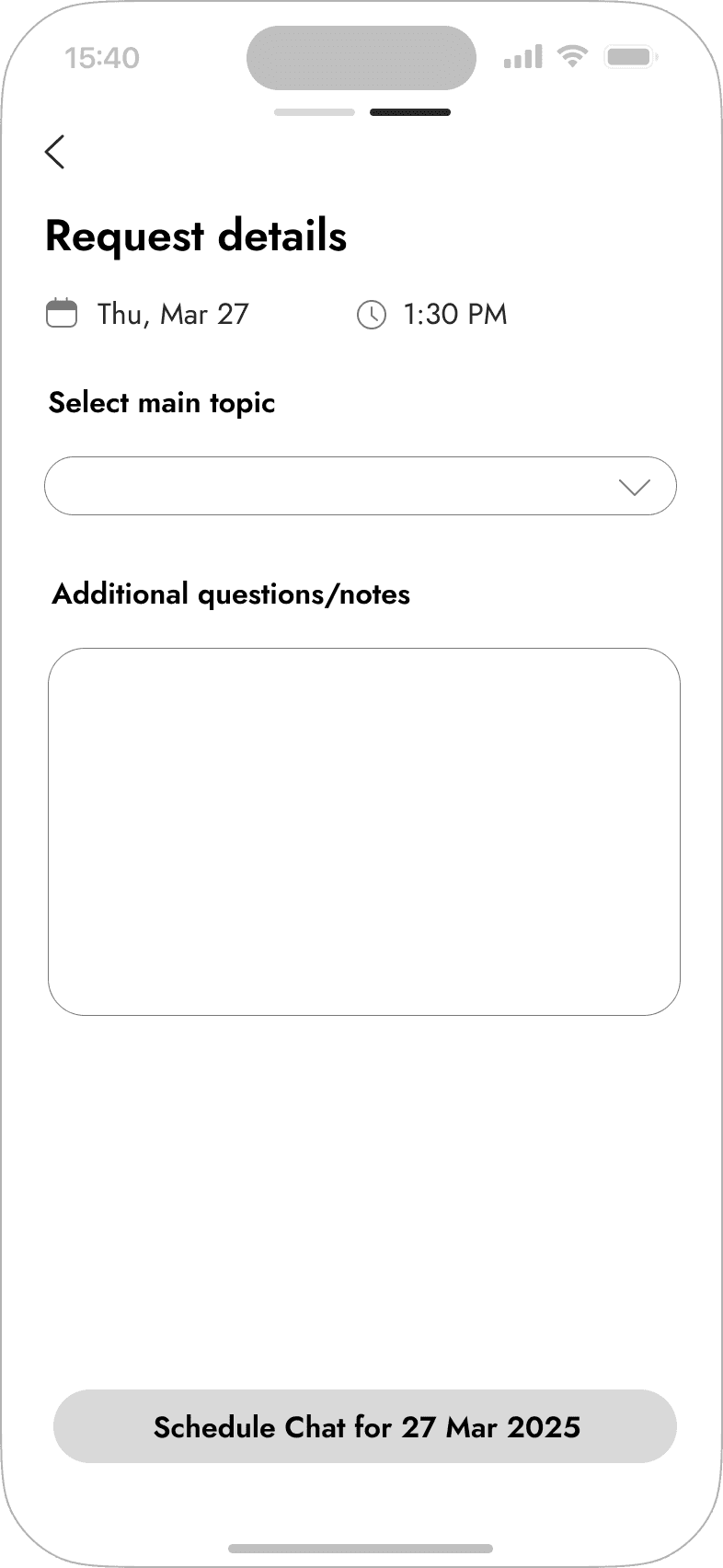
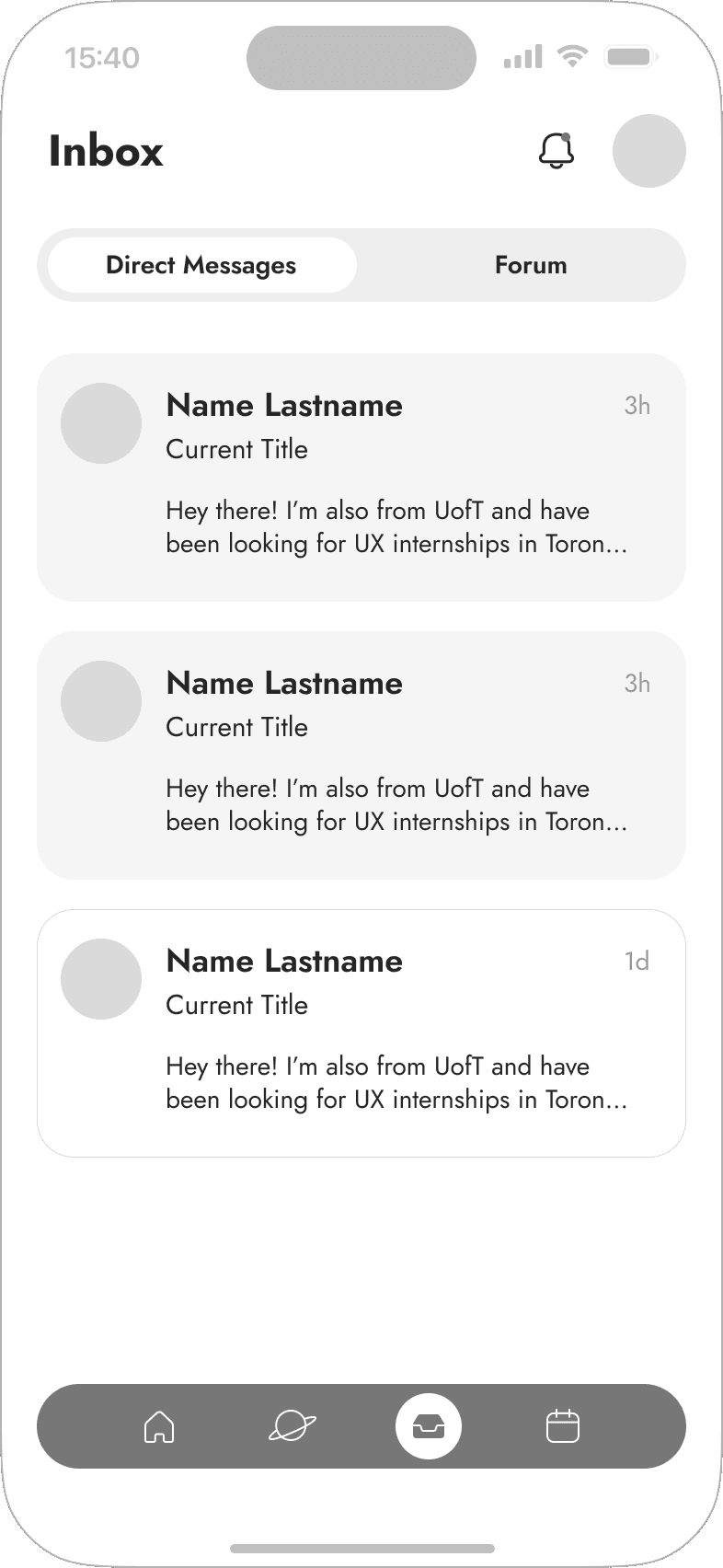
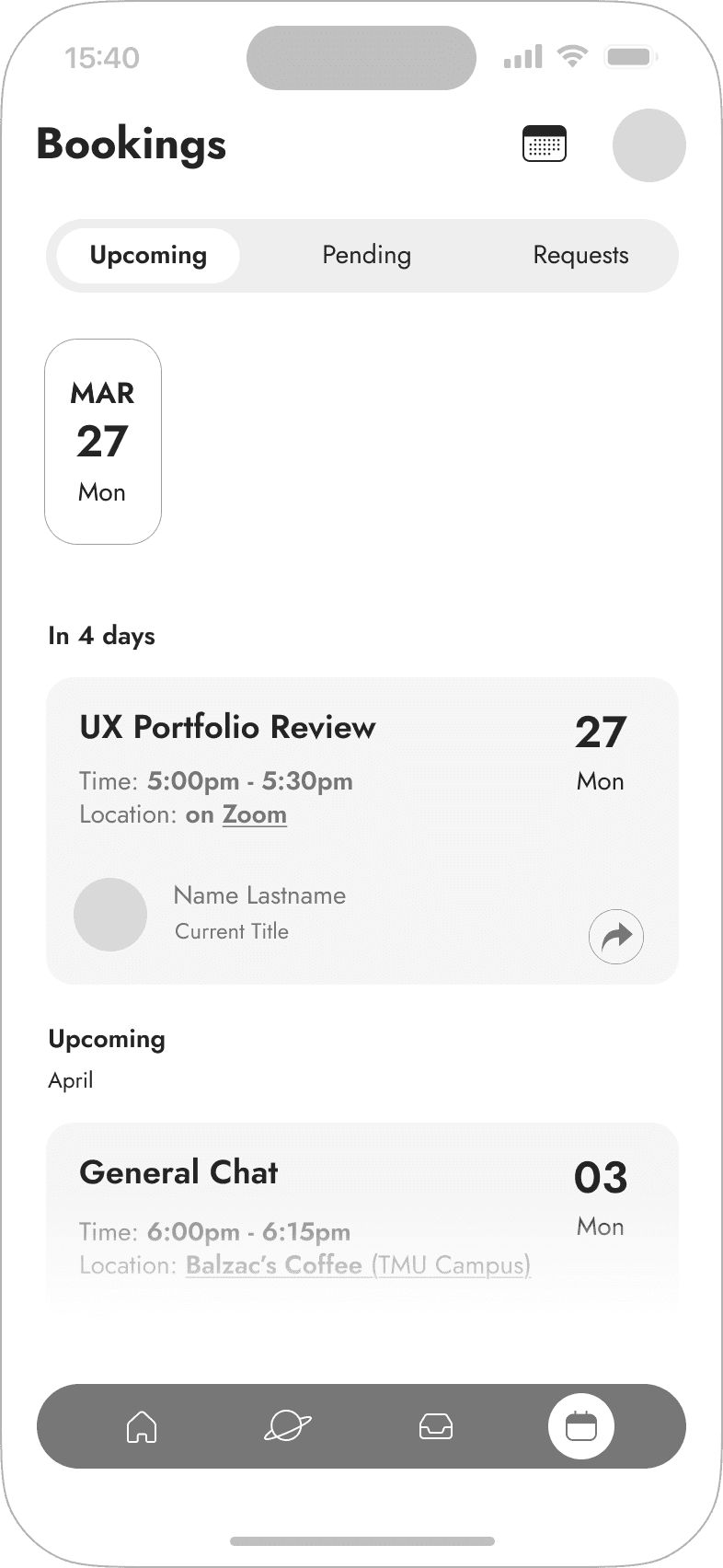
Mid-fi Wireframes Used for the Usability Tests
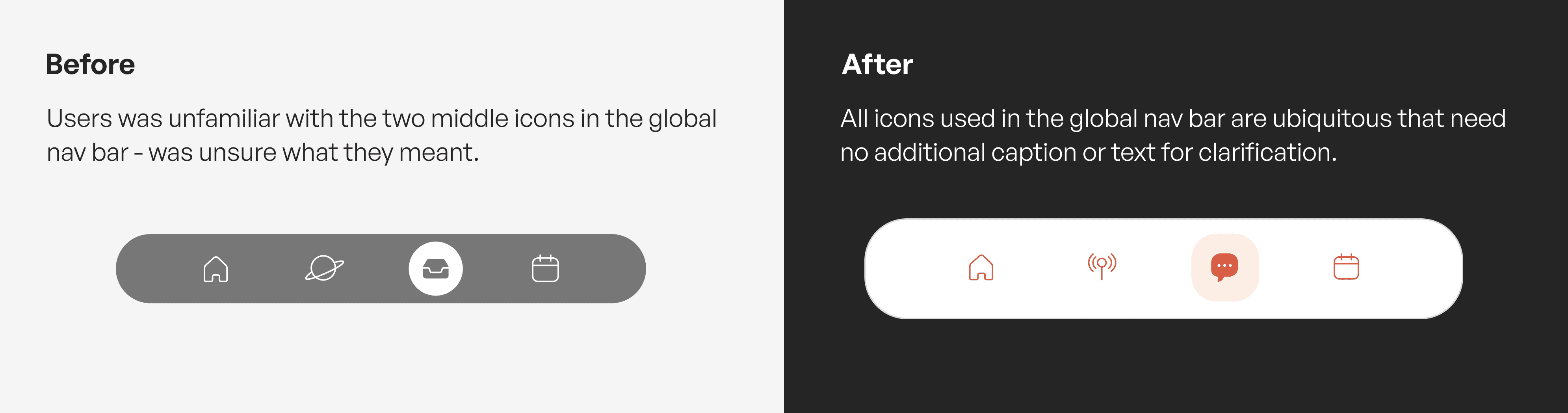
Key Revisions
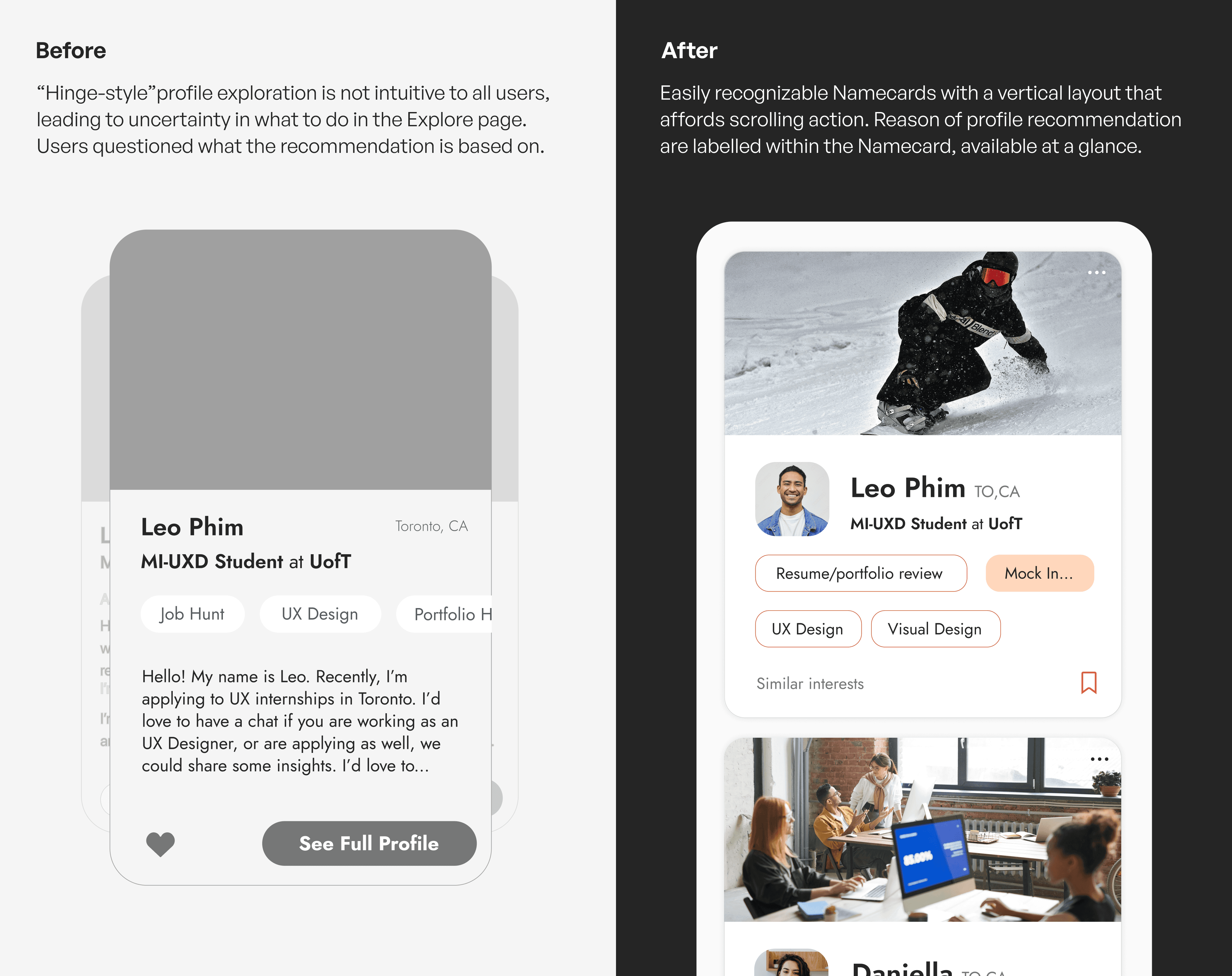
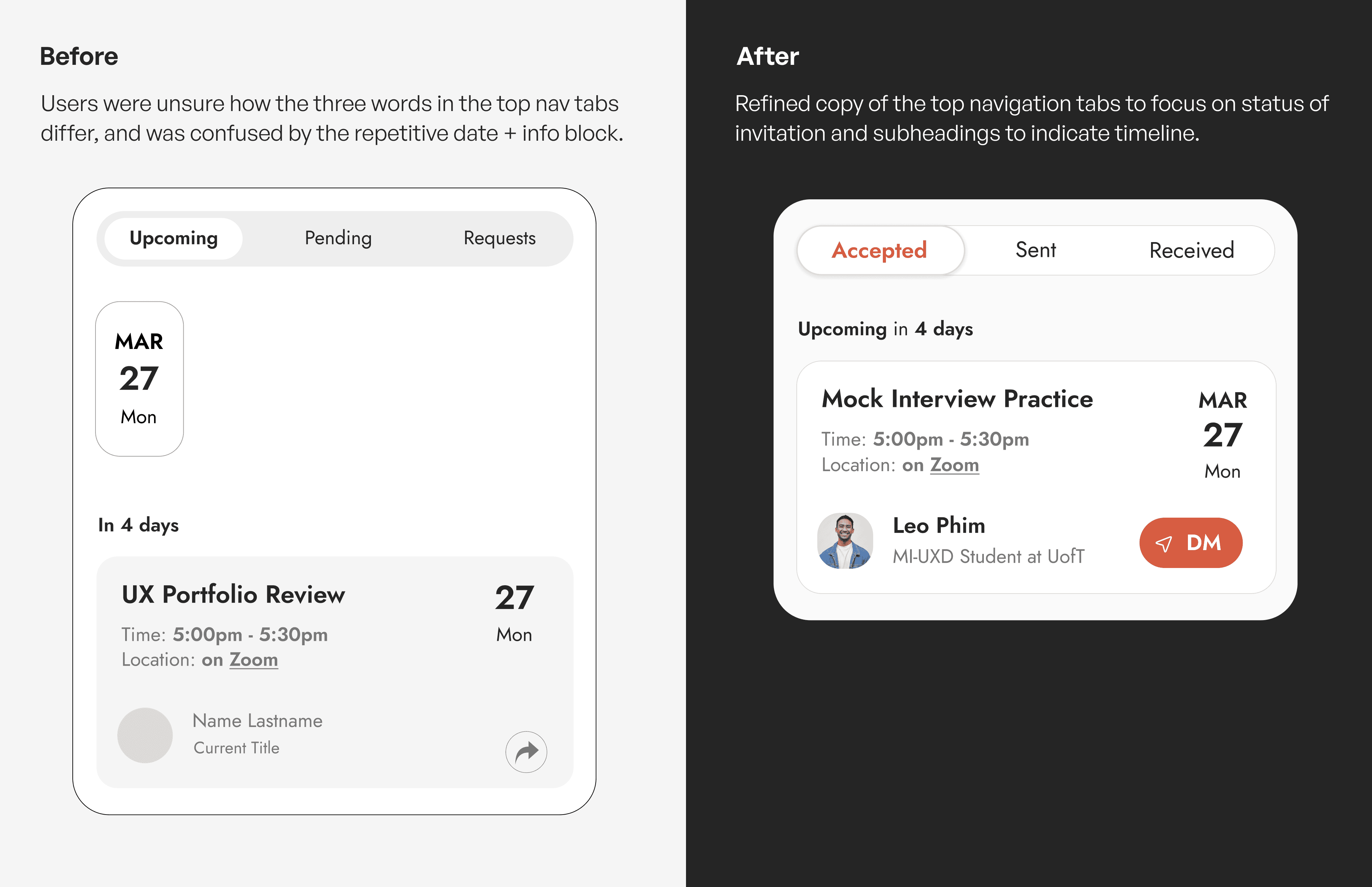
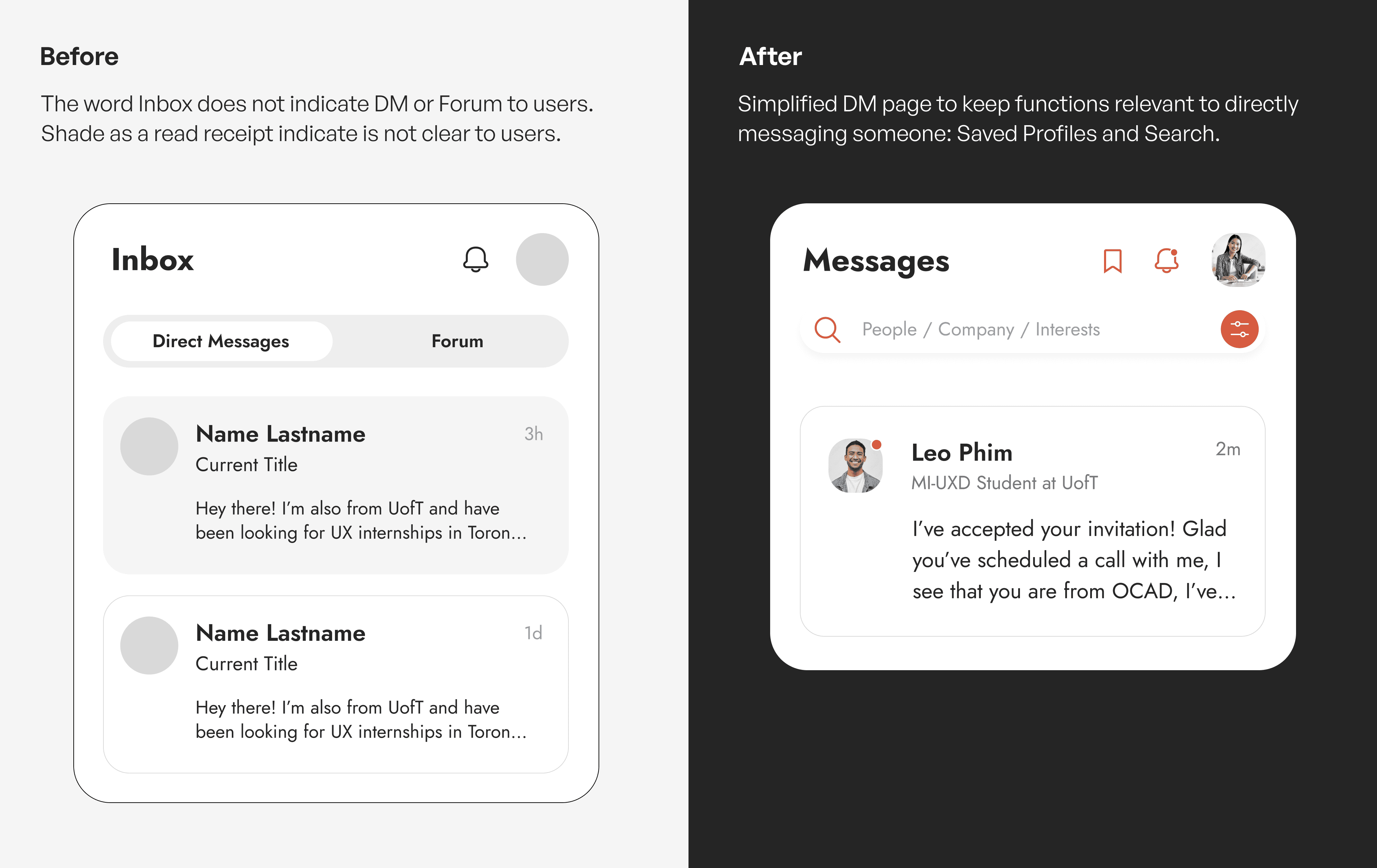
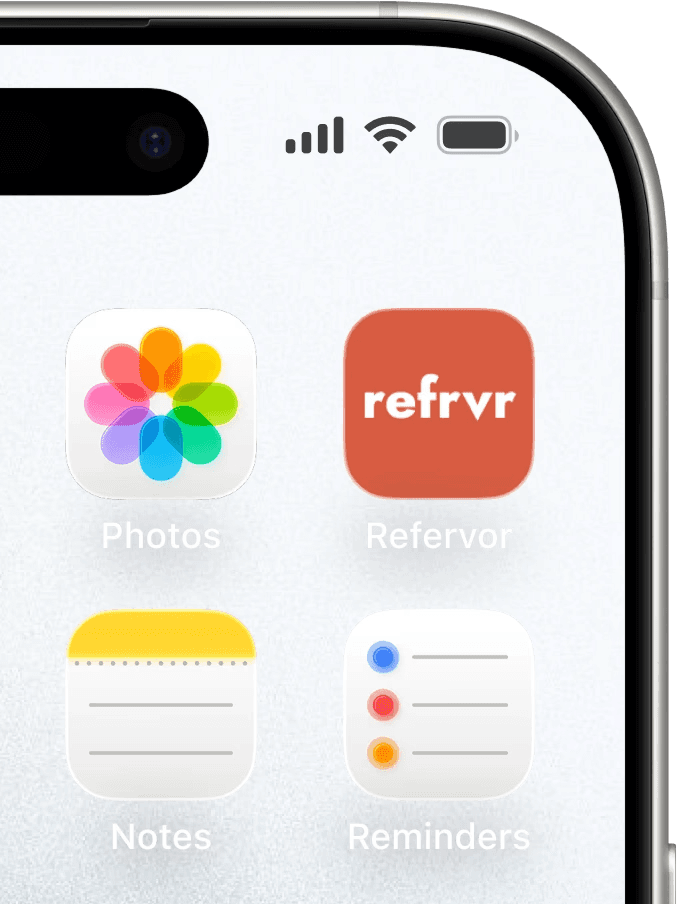
branding, colour, and typography
Aiming to 'de-institutionalize' networking via Refervor, I selected a modern, geometric font paired with a warm, energetic orange palette.
The name of this app combines 'Referrer' and 'Fervor', two words that reflect the currency and energy exchanged within professional communities.
Typography
Heading 1
32 | Jost | Extra-Bold
Heading 2
24 | Jost | Extra-Bold
Heading 3
18 | Jost | Semi-Bold
Body
16 | Jost | Regular
Caption
14 | Jost | Regular
Brand Colours
Final Design
Setting Up Your Account
Scheduling a Session with Someone through the Explore Page
Scheduling a Session: Following-Up with Direct Messaging
What's Next for Refervor?
Exploring an alternative perspective
For the personas of this app, I focused solely on someone seeking help. For future iterations, I want to explore an alternative perspective where the person primarily uses the app to help others, such as features like availability and schedule settings.
A rewards system
To sustain user retention, I want to explore third-party collaborations, such as Mentorship Certificates, that can be posted to LinkedIn that validates users' contribution on the platform.
Lessons Learned
No one-size-fits-all solution
During the user research, I got entirely different responses with the same questions; extroverts and introverts approached situations in opposite manners. From this, I learned that providing multiple options to completing the same task flows are critical to an accessible and inclusive user experience.
Assumptions are dangerous
As a designer, there are many systems that I implemented assuming that the user will inherently understand – which was quickly proven by the usability testings that my assumption was not true. Ultimately, following established design patterns that users are familiar with supports a positive user experience.
Accessibility matters
I swiftly changed the primary accent colour of Refervor's branding from pink to orange following a chat with a collegue who's colour blind. As the first mobile app I designed, I recognize now that there are many more research procedures that I can take to ensure the products I design reach minimum level AA in WCAG standards.