GoAble
A mobile washroom accessibility companion that supports public mobility through intuitive navigation and community-verified data.
Type
Graduate Course Work
Time
12 Weeks
(2025 Sep-Dec)
Team
4 Students
Role
Comparator/User Research & Analysis,
Wireframing, Prototyping & UI Design
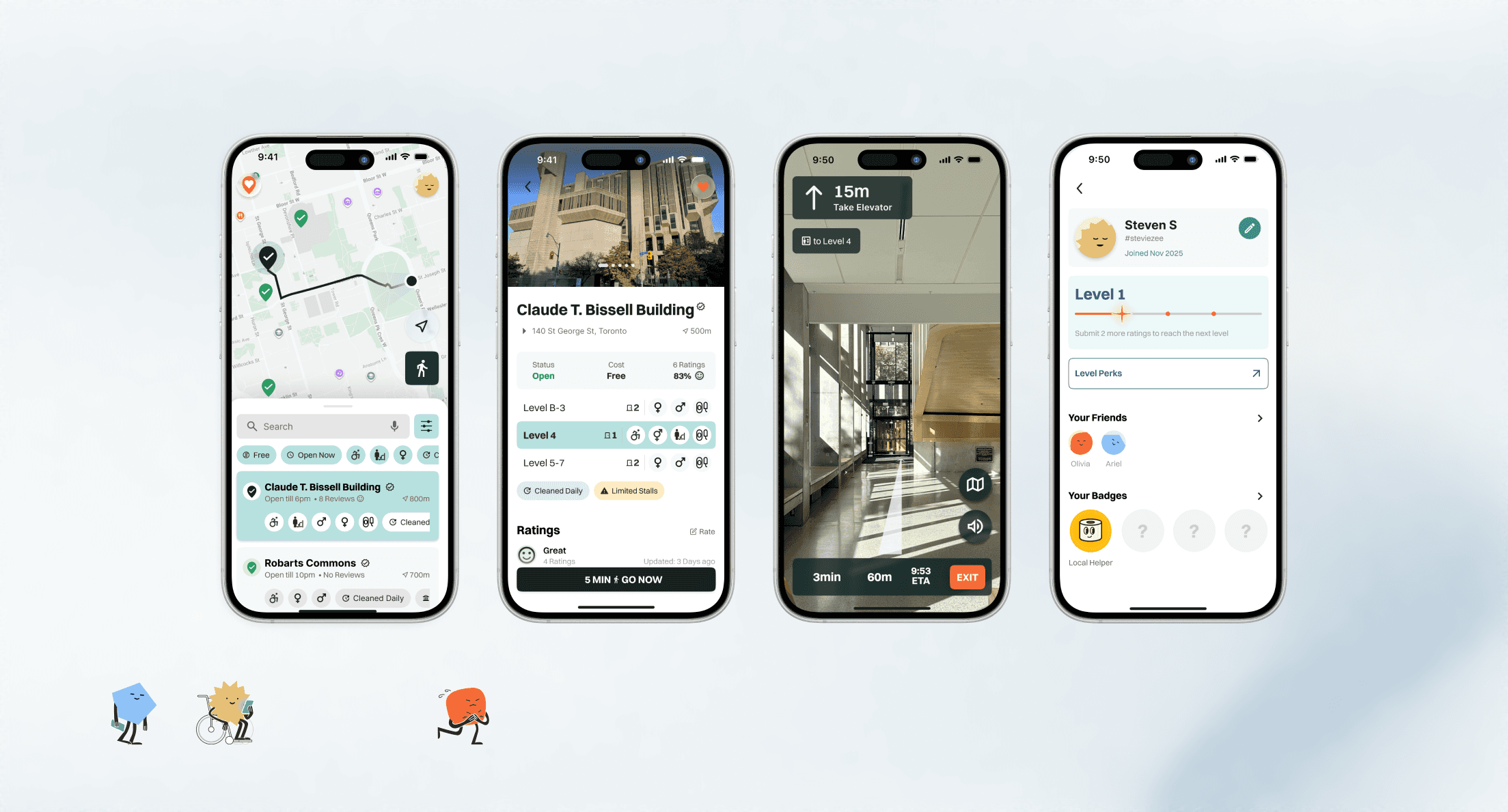
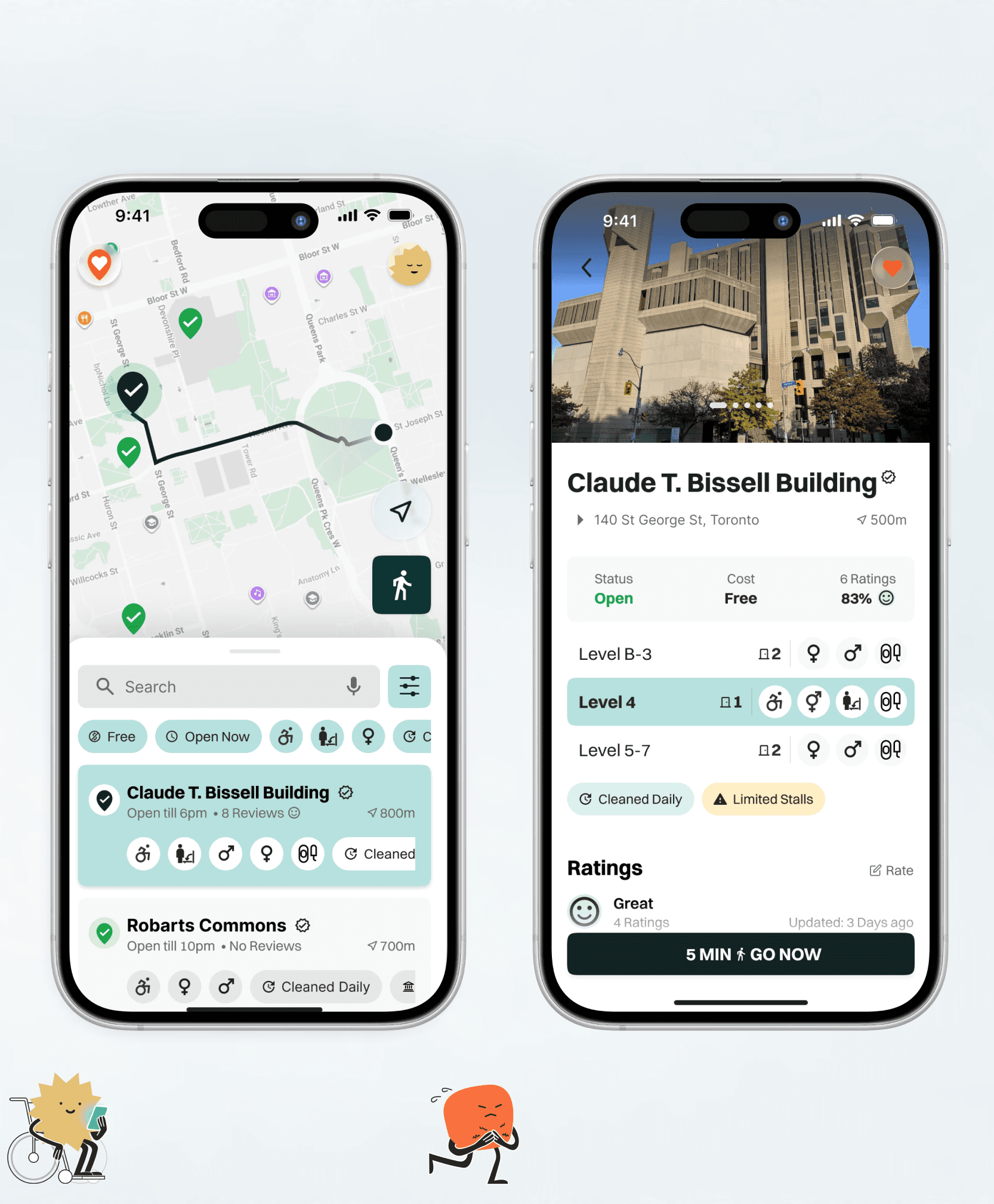
GoAble is a navigation tool designed to help user find suitable washrooms in moments of urgency. To ensure speed and usability for all, especially those with mobility impairments, the user experience prioritizes a short critical path and high-level of customization.
I led the UX strategy — conducting comparator analysis and synthesizing research insights to define the app's unique accessibility proposition. I also designed key interfaces, including the core map and list views, and refined the final high-fidelity designs following usability testing. Throughout the process, I collaborated with my team on user research (UXR) and journey mapping.
The Problem
People, especially those with mobility impairments, struggle to find washrooms that are truly accessible for them in public.
Solution

Context
Finding a washroom in public comes with unique challenges for all.
Many articles and studies address the difficulties of washroom accessibility for people with medical conditions, invisible disabilities, and mobility impairments (i.e. wheelchair users and caretakers with strollers), which testify to a real need for accessibility in washroom-finding.
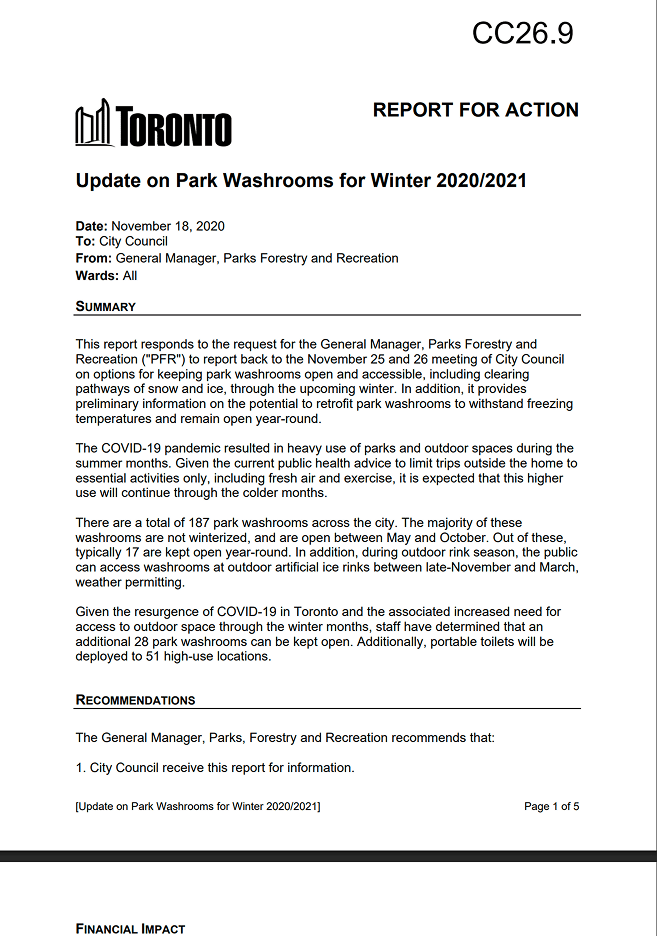
38%
businesses have Customers Only Washrooms,
47%
of which are chain
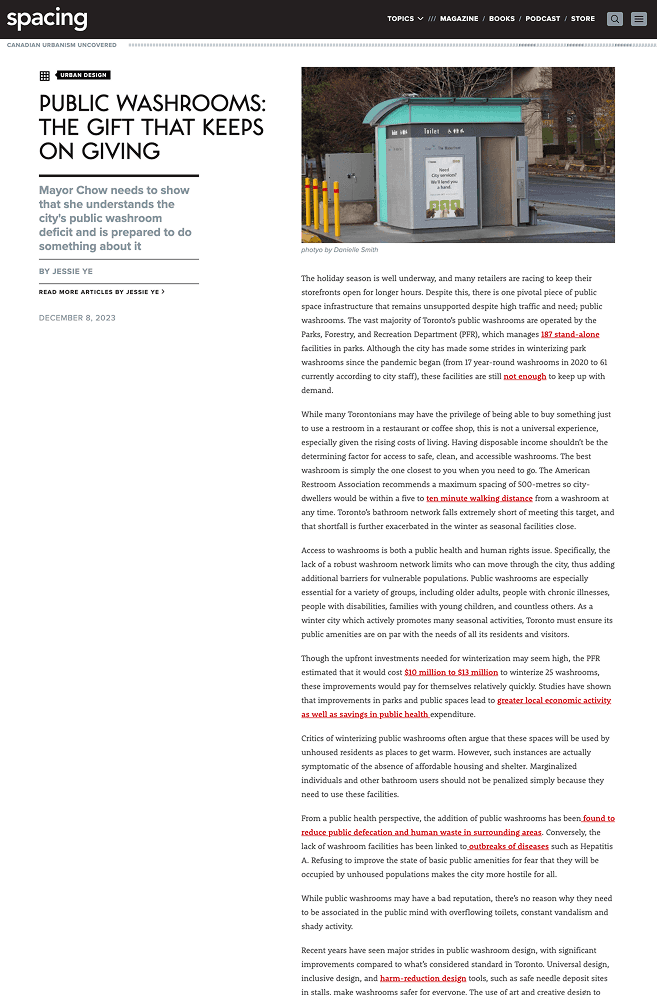
"38% of businesses in Toronto’s downtown commercial strips display Washrooms for Customers Only signs, 47% are chain businesses."
I conducted a comparator analysis, and found out that a core issue is that users typically rely on navigating to chain businesses for washroom uses.

Google Maps
✓
Most commonly used, multi-functional tool.
✕
WC searching experience is inefficient/unreliable.

Toilet Finder
✓
One-click task flow, utilizes crowdsourcing for washroom information.
✕
WC data is unverified.
GoHere
✓
Tailored to users with Crohn’s and Colitis.
✕
Fully relies on institution data; zero user input.
We mapped the specific factors that hinder one's experience on a scale of influence — and used this as a goal-post to inform our design strategy with corresponding priorities.
Unreliable conditions
Users want to know the conditions of the washroom help them make a decision.

Policy vs reality
Accessibility-compliant ≠ accessible for all; users with niche needs need more info.

Missing indicators
Users don't want to "trial-and-error" washrooms, especially not when they are in a hurry.
Unsatisfactory Experiences ⇢
⇢ Detrimental Impact
Questionnaire
We conducted an online survey, collecting 50+ responses to discover exactly what users prioritize when looking for/using washrooms in public.
Responses included users with relevant medical conditions, mobility challenges as well as baseline users.
80%
Selected they will somewhat/very likely trust user reviews about a washroom’s accessibility.
only
3%
Felt very confident that they can find a suitable public washroom when they leave home.
Cleanliness
Clear signage and directions to it
Touchless fixtures (i.e. automatic doors)
Photos of the washroom
User ratings
Real-time availability
These statistics led to a ratings-based approach, and informed us what kinds of information users look for to support their decision-making.
User Interviews
We interviewed 10 participants to dig deeper into this sensitive but important matter.
We knew that we wanted to craft a solution that supports user groups with unique challenges/washroom needs, so our inclusion criteria ensured that we only recruited fitting participants for our user interviews.
Selected Inclusion Criteria Questions
Do you or anyone you care for have any of the folllowing mobility impairments that affect your movement in public spaces?
Wheelchair
Strollers (for children)
Other: please specify
Do you currently have, or have experienced any of these following medical conditions?
IBS (Irritable Bowel Syndrome)
Any other conditions that have urgent washroom needs
Has IBS
Has UTI
Has sensitive stomach (always urgent)
Wheelchair user
Has dependant in stroller
Has (adult) dependant in wheelchair
Findings
Unexpected conditions
8/10 users reported discovering unclean facilities, missing necessary amenities, or out of order bathrooms only after arrival which exacerbated their urgency and anxiety.
Makeshift solutions are ineffective
6/10 users expressed that they have used Google Maps to search cafes or fast food places to find washrooms, but found the experience tedious and time-consuming.
Unclear wayfinding
5/10 users have had trouble locating washrooms in public due to vague signage, misleading wayfinding icons, or physical obstructions due to construction, leading to discontinued effort.
Compromised health
4/5 users with medical conditions expressed that they would prioritize hygiene over immediate relief; choosing to delay their need despite the physical pain and health risks.
Silent struggles
All wheelchair users/dependants avoid asking strangers for wayfinding guidance, finding the experience unproductive or demeaning due to the complexity of their specific requirements.
These barriers drove our strategy to aggregate institutional and crowd-sourced data, creating a dedicated platform for a comprehensive washroom discovery experience.
User Personas
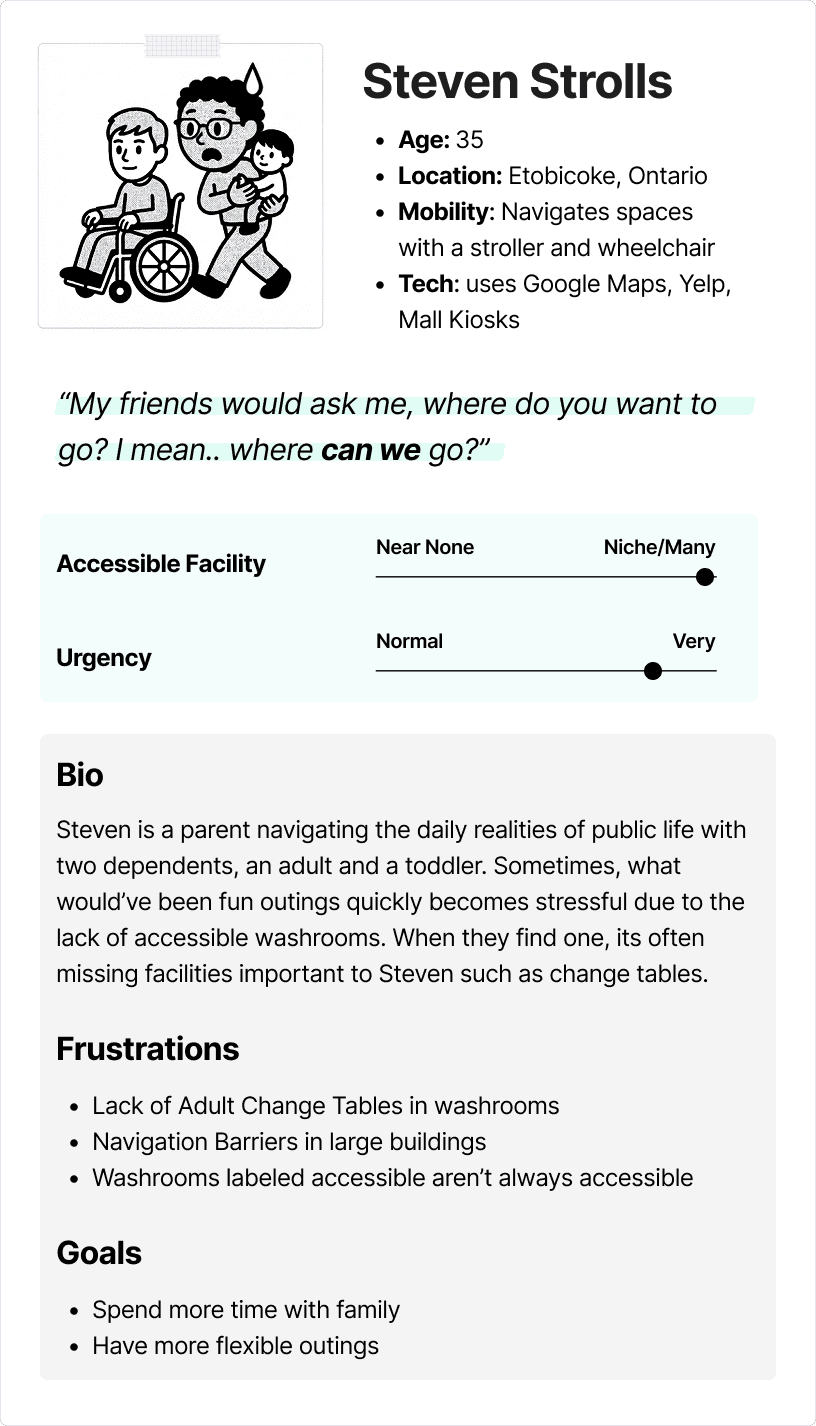
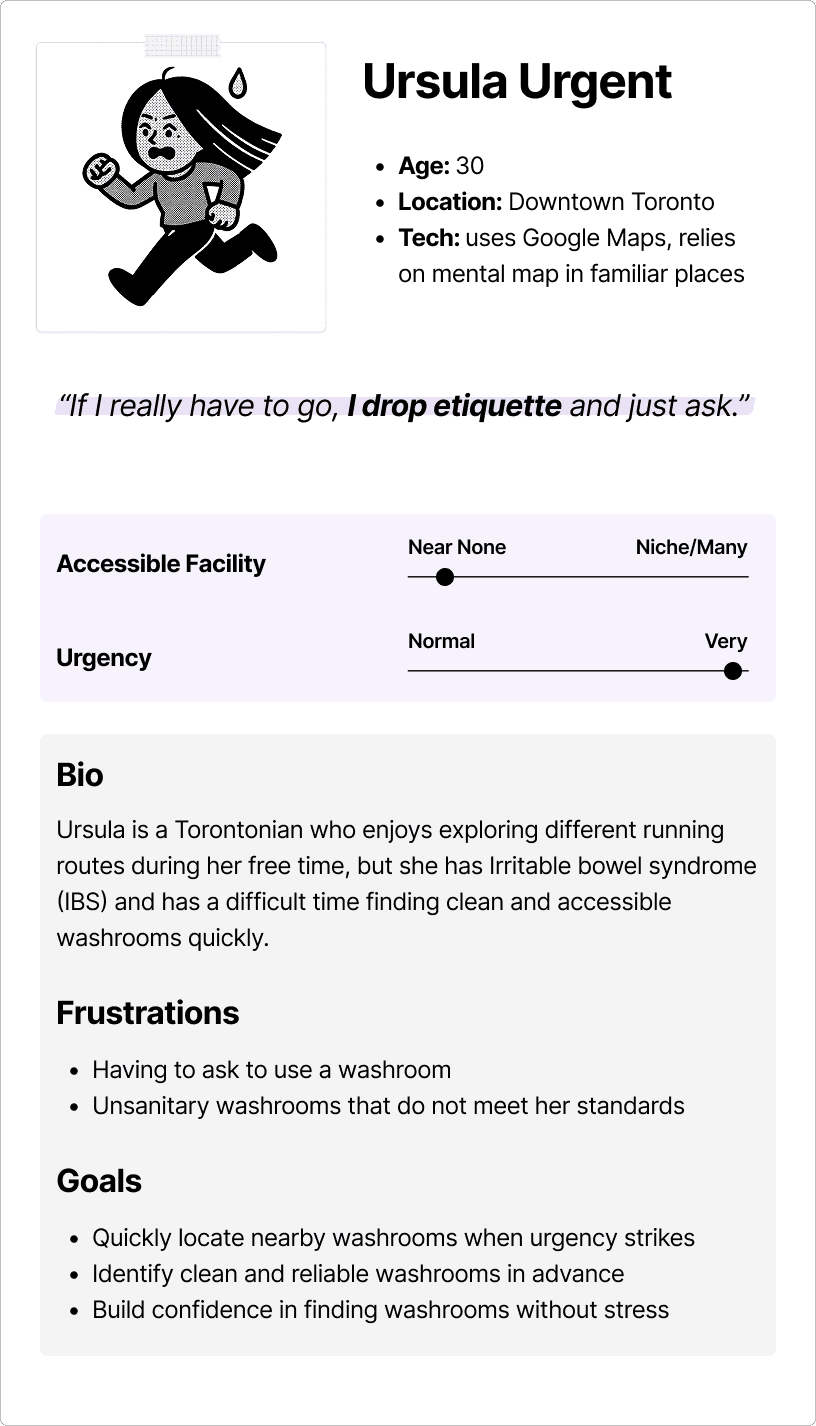
Our 2 personas highlight the need for a fast task flow and high level of customization in filtered search due to their distinctive conditions.
User Journey Map
We identified the specific use cases of our product based on our user research: an intuitive yet comprehensive utility (planning, filtering, navigation) tool.
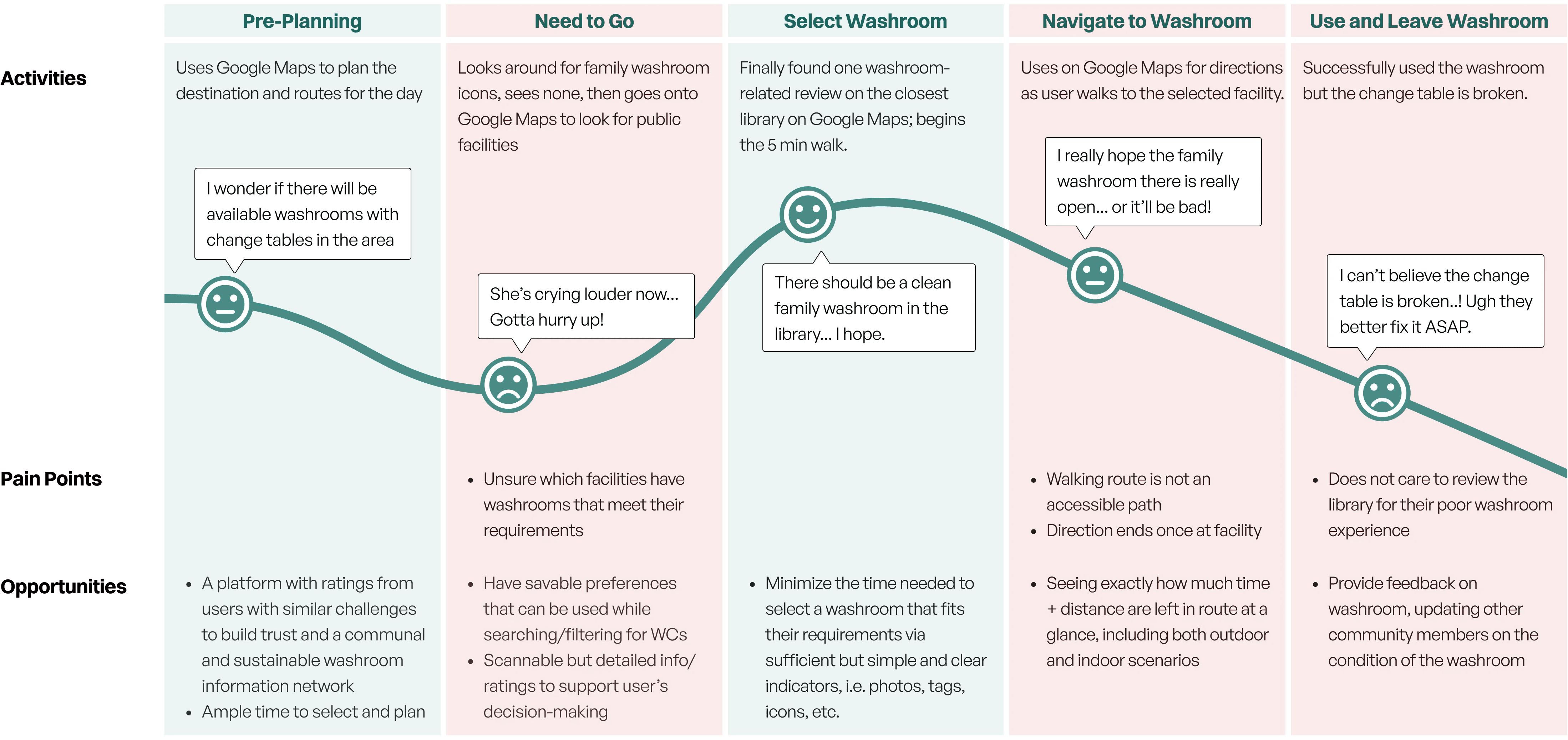
Existing User Journey Map
The Challenge
Task Flow
We ensured that the task flow of choosing, locating, navigating to, and reviewing a washroom, is as short as possible.
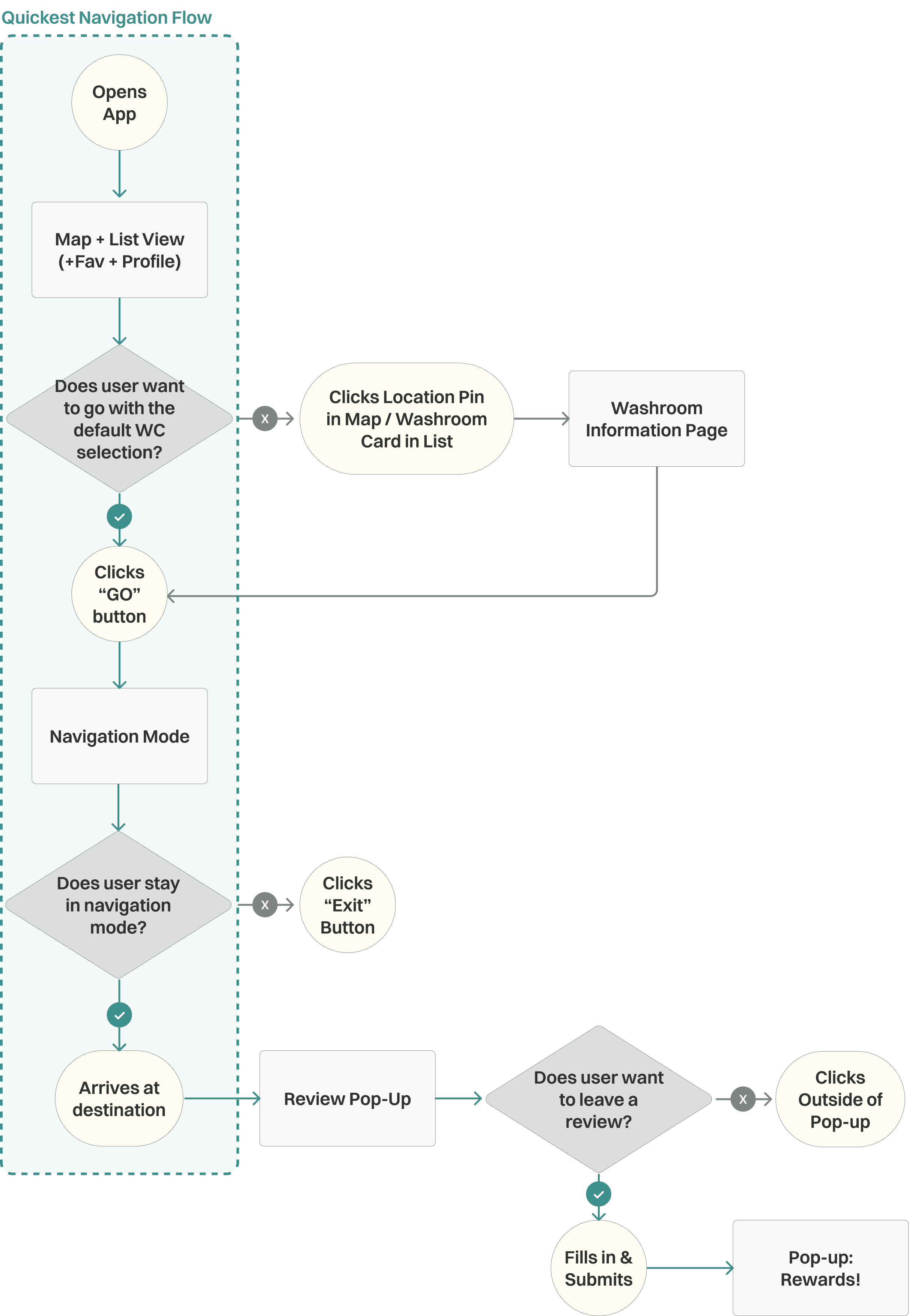
Typical Task Flow: Choosing, Navigating to, and Reviewing a Washroom
Design Decisions
We quickly sketched and compared different UIs, I sketched two screens ↓
Main Interface: Map/List View
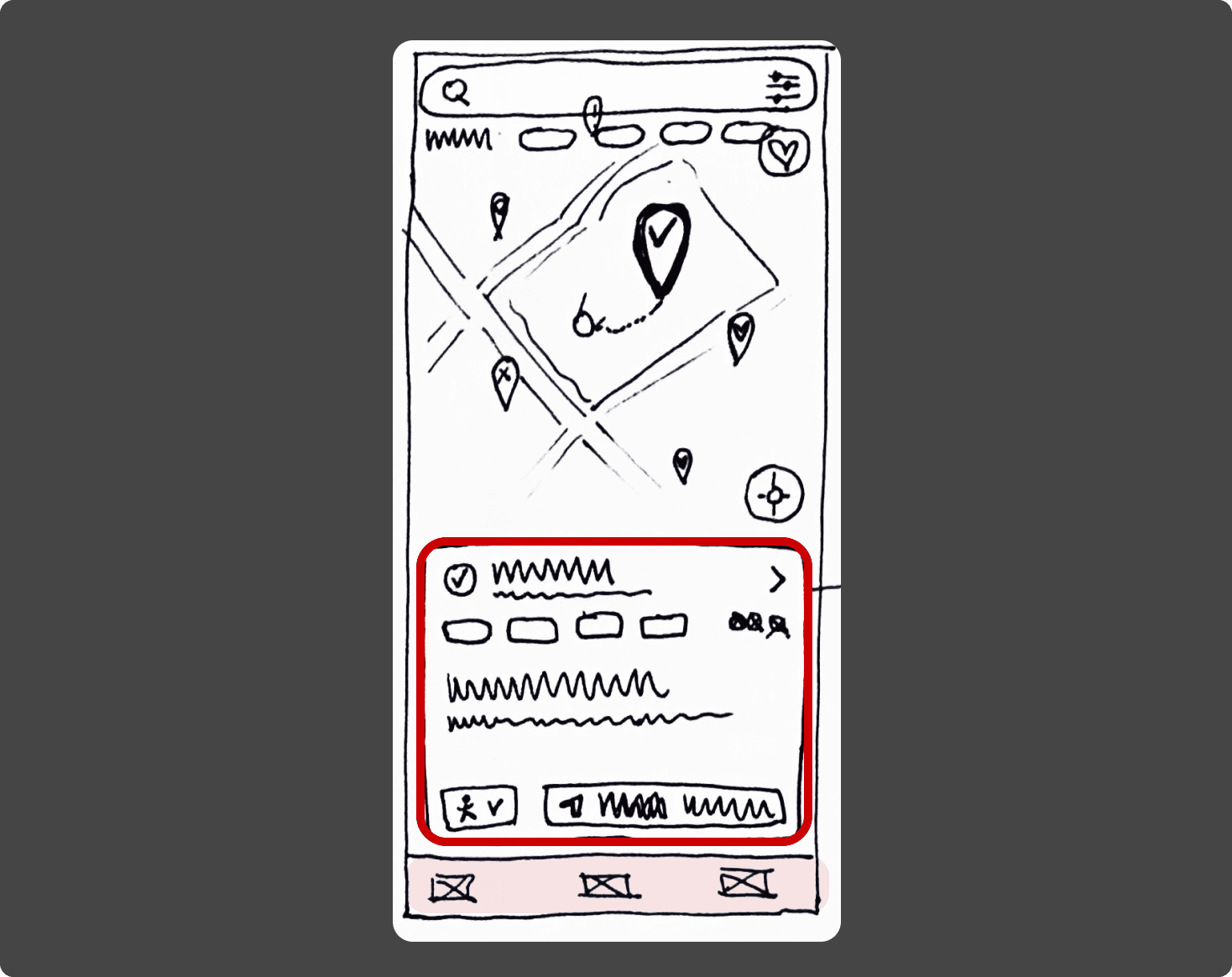
Info Card
Low information density and relies on map-based browsing; inefficient and lacks flexibility.
nav bar?
Determined unnecessary (app has 1 linear task flow); screen space can be saved for map/list.
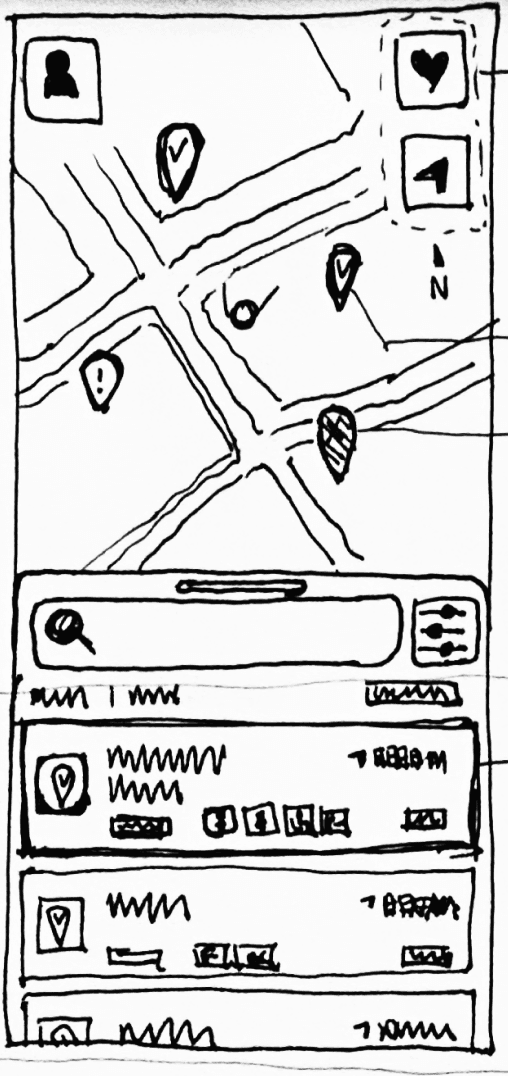
search bar + filter icon
Placed at the center of the touch zone for easy access, supporting search/filtering at all times.
Bottomsheet List
High-level comparison of multiple washrooms at once; retractable bottomsheet gives user control (for both map or list-oriented).
Filters Page
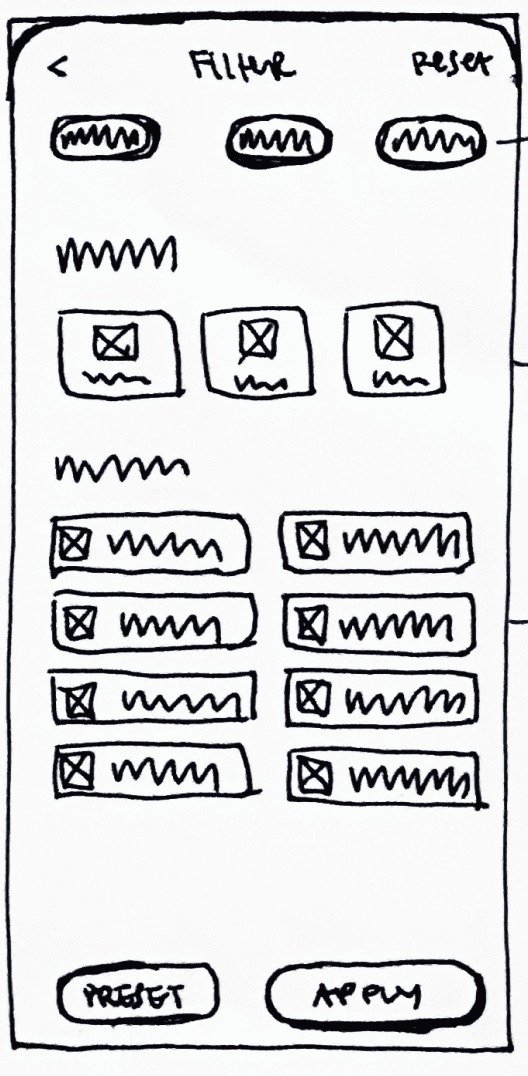
Pills
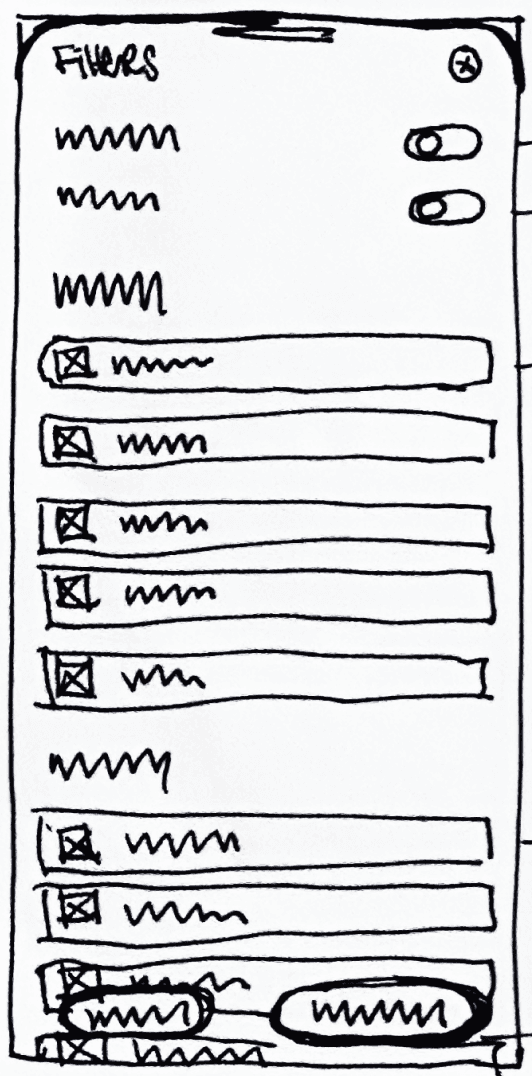
Toggle
Inefficient UI; text and toggle are split into two parts which increases cognitive load.
Full-line List
Clear UI, inefficient use of space. Effectiveness depends on length and quantity of tags, not good for large amounts of short text.
Usability Testing
After 8 usability tests, we found that ambiguous UX copy and long text tags confused all users.
To simulate a realistic scenario, we asked our participants to put on their persona hat, and to complete the two tasks as Steven Stroller. I built the prototype with responsive Components so we could examine how users proceed the tasks would differ from our assumed flows.
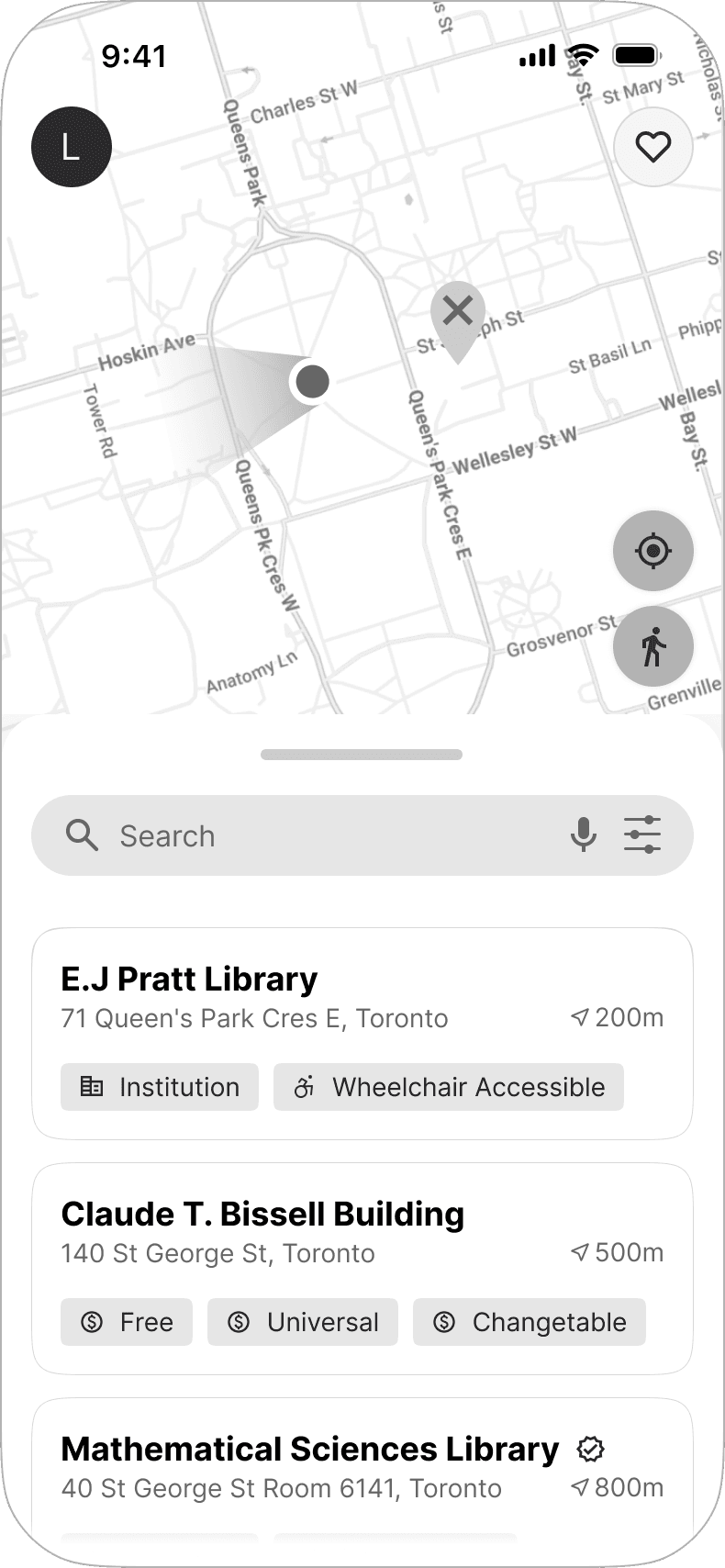
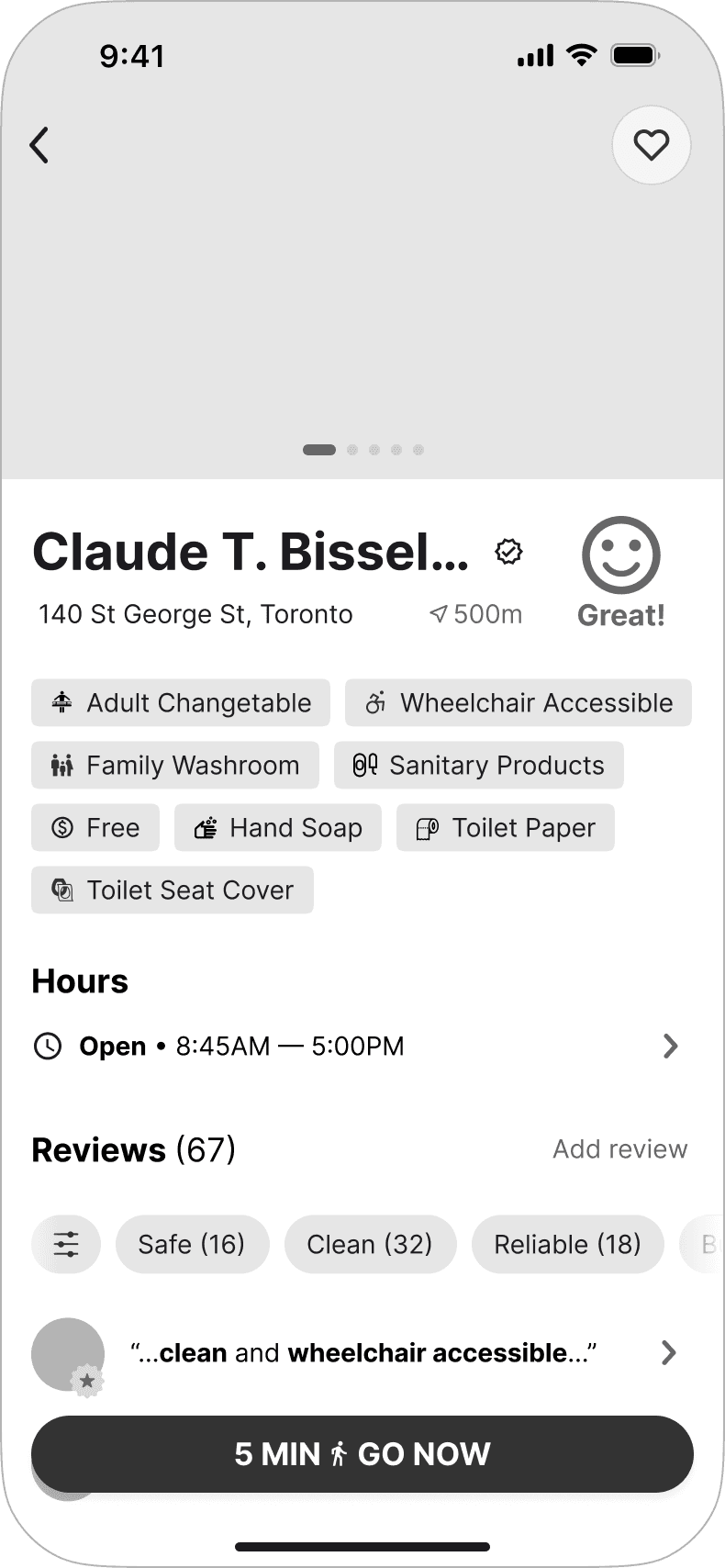
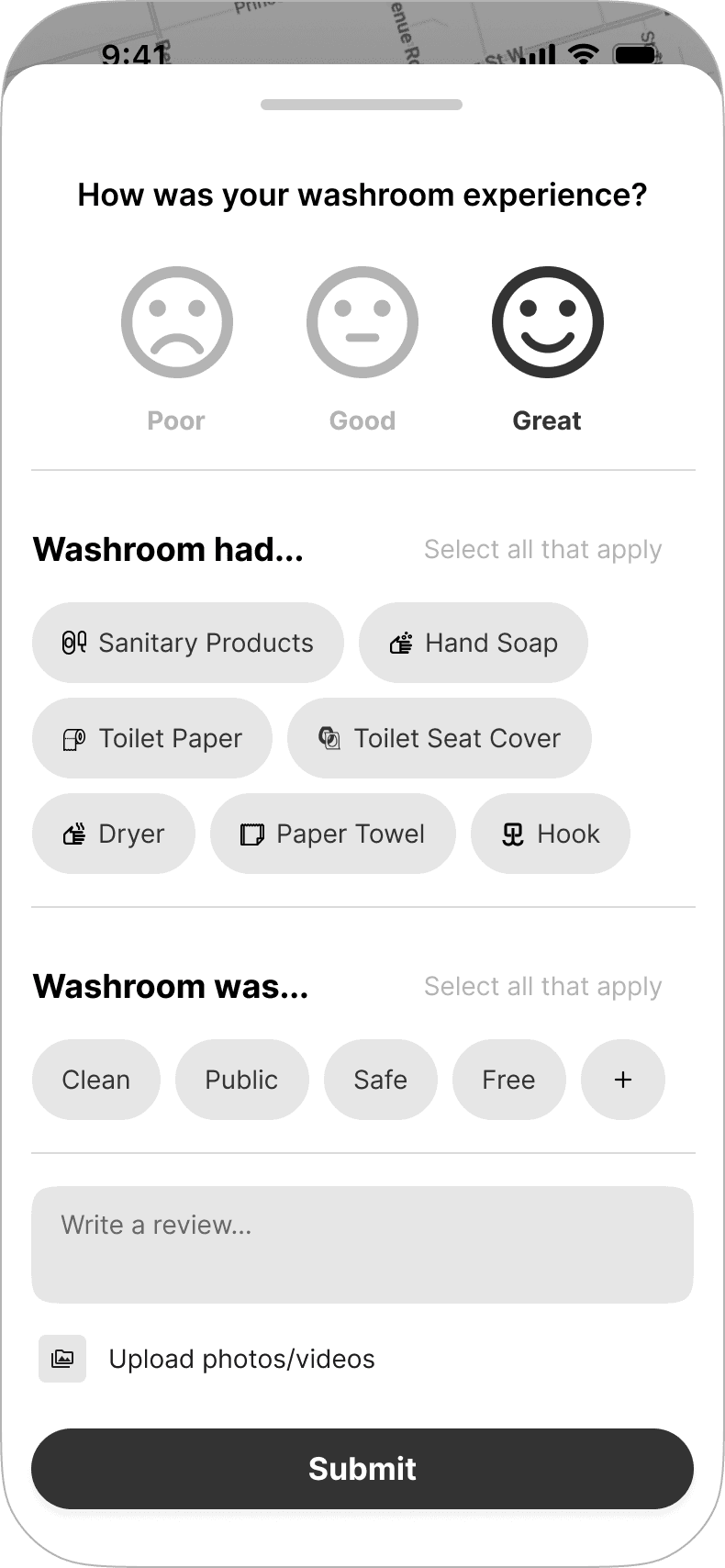
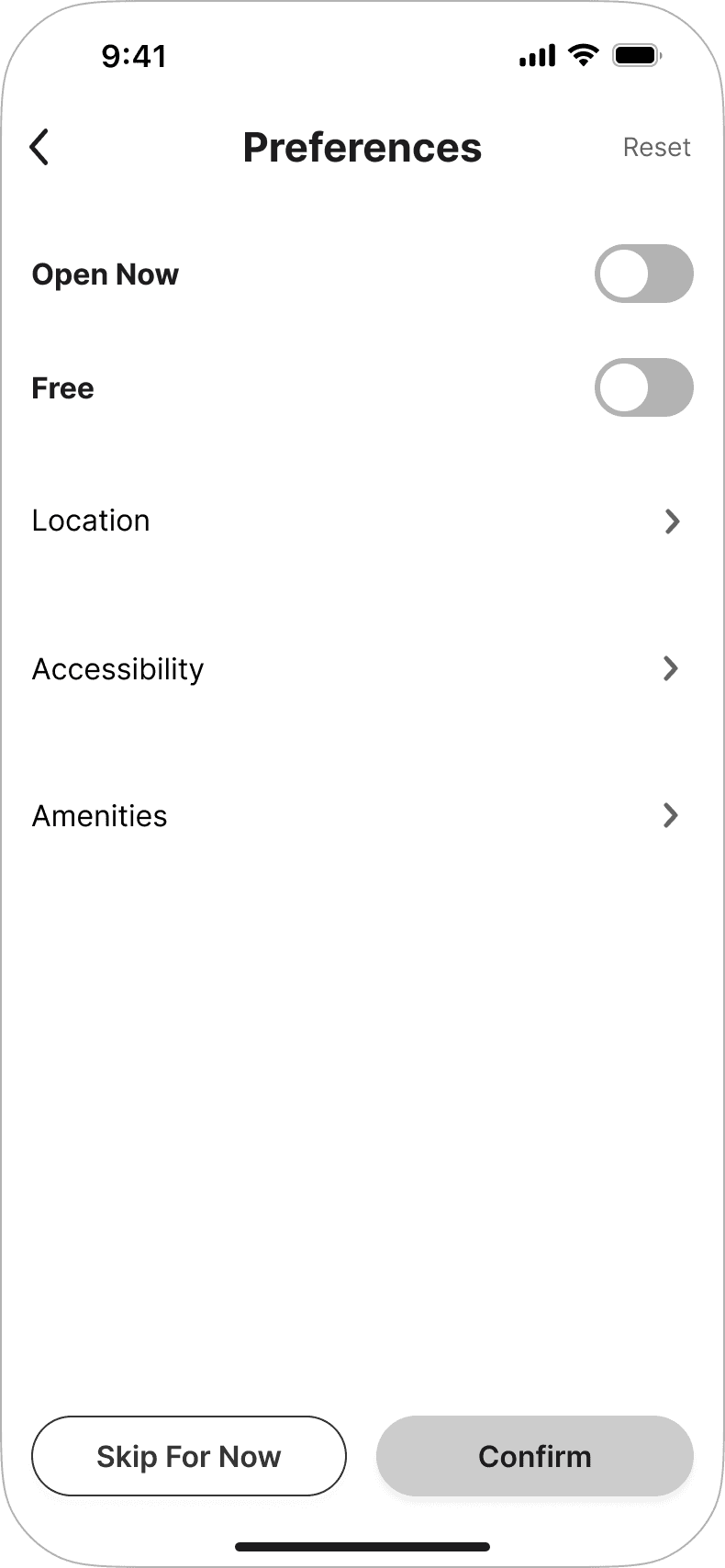
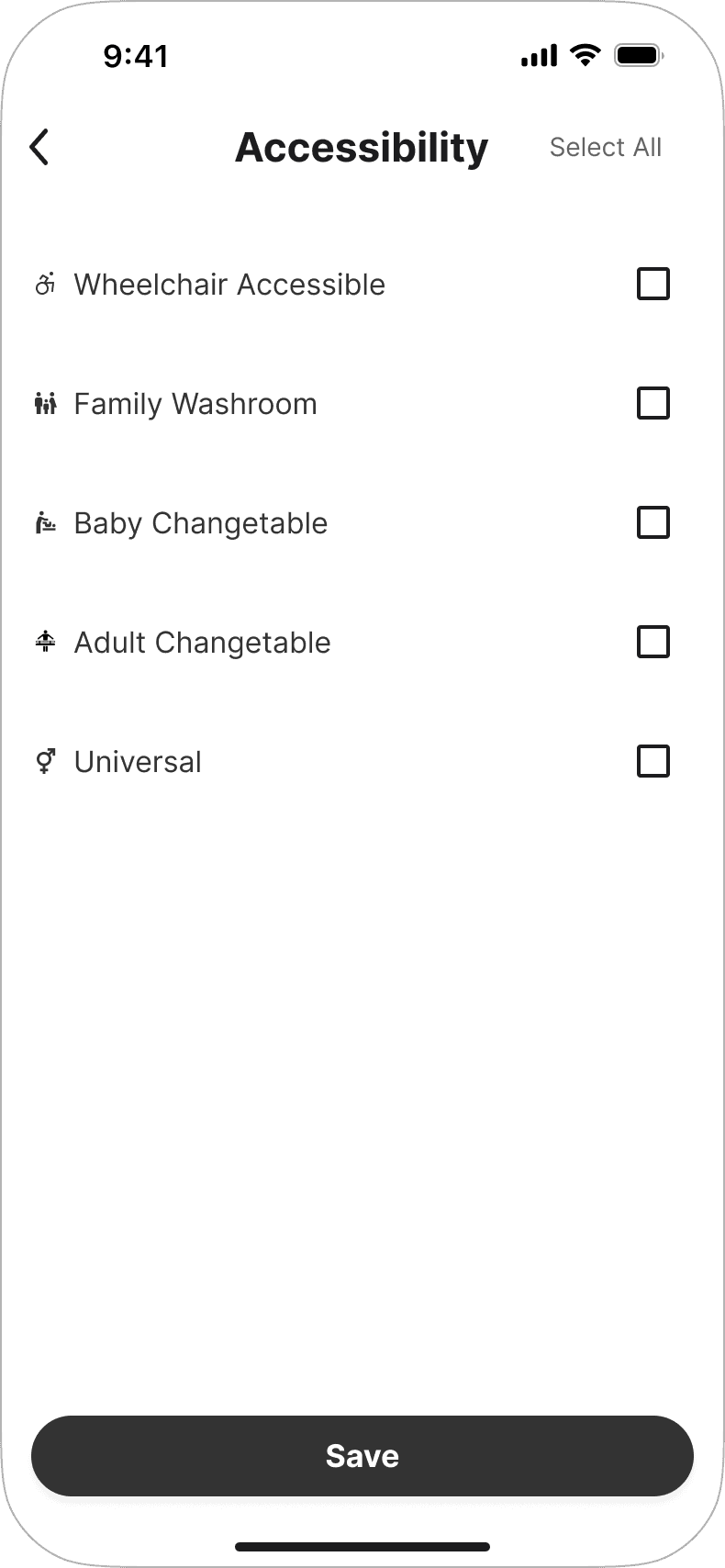
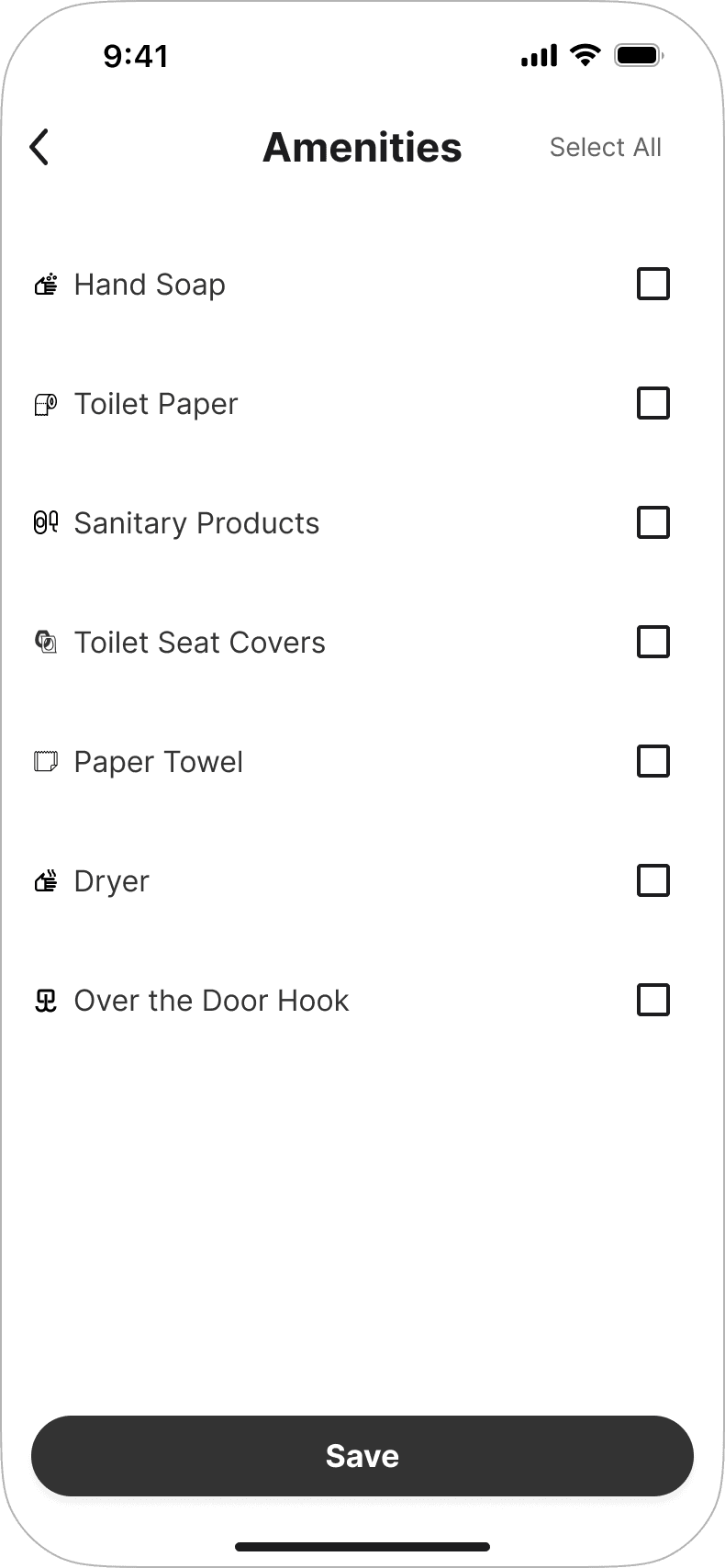
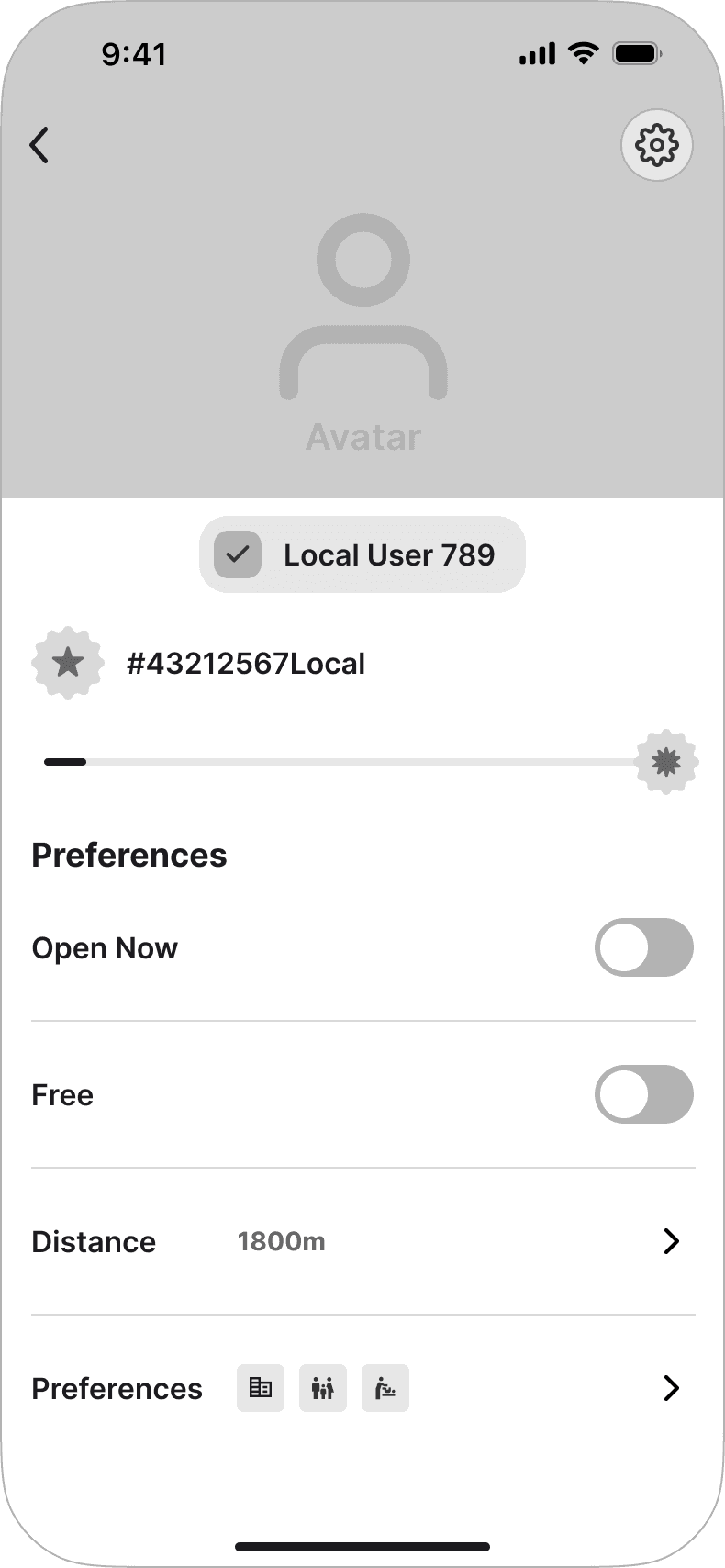
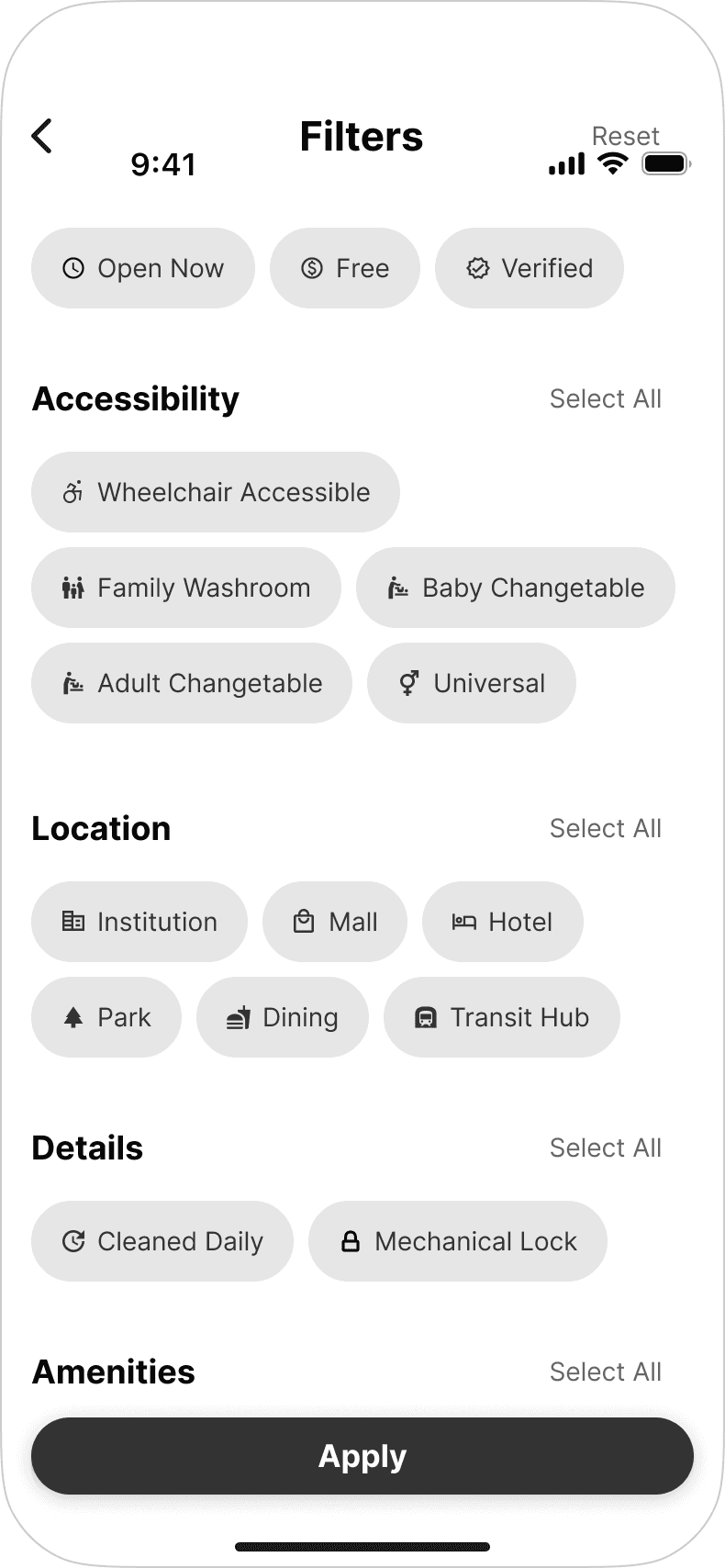
Mid-fi Wireframes Used for the Usability Tests
Key Revisions
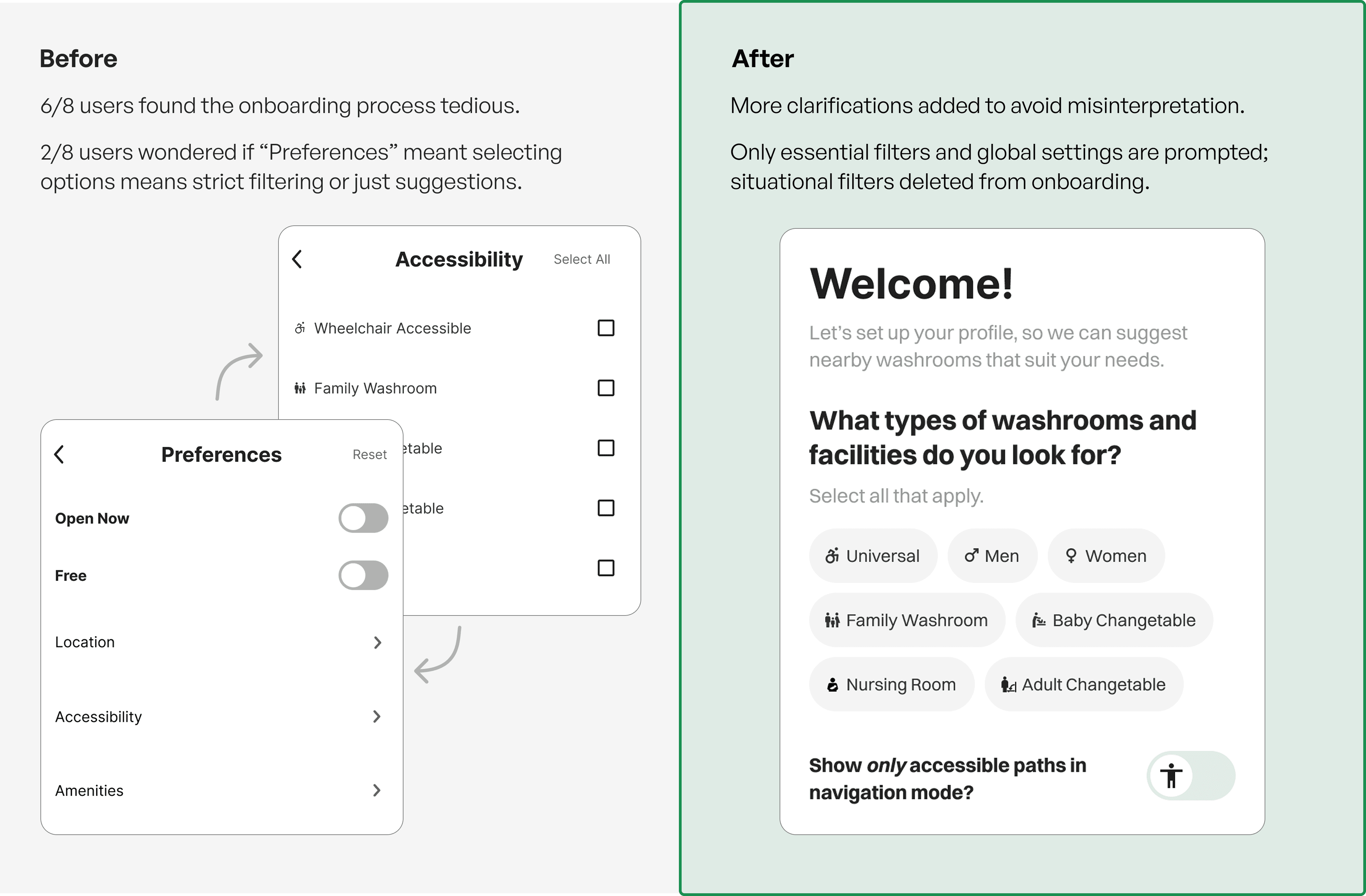
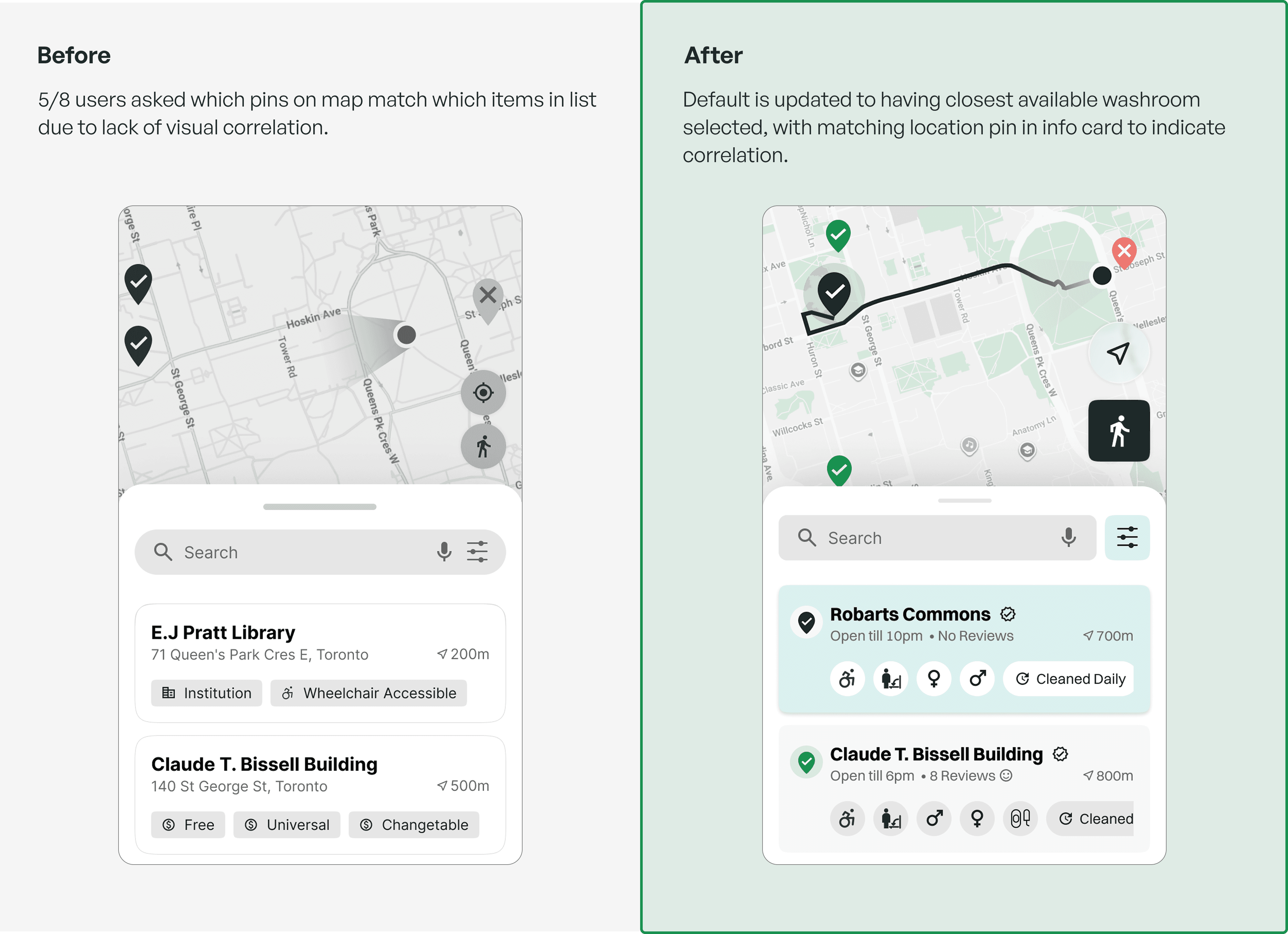
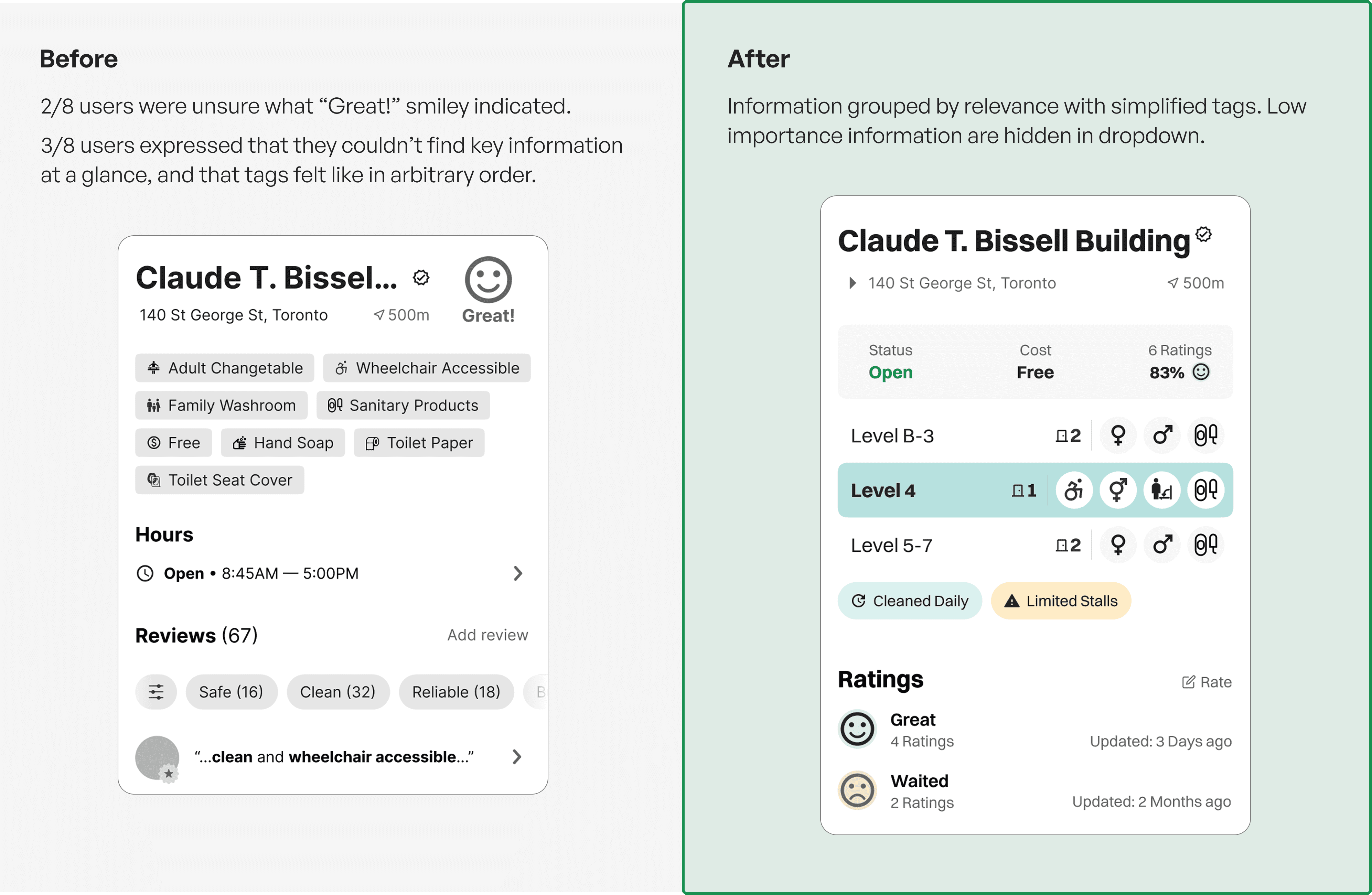
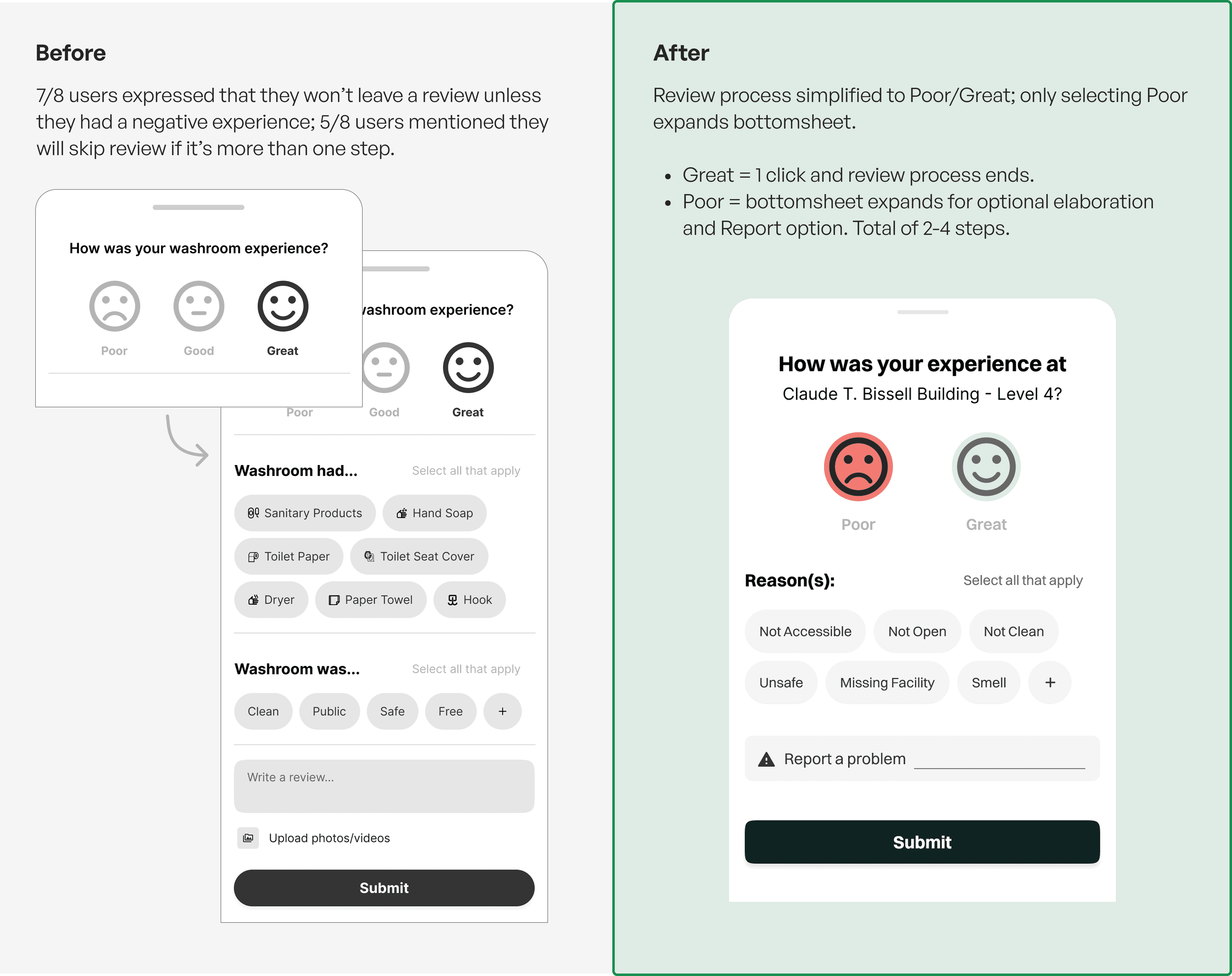
One key issue was the dense amount of information presented at a similar visual hierarchy that overwhelmed users. Aiming to improve on the general clarity and simplicity of the app to support quick decision-making for users, I edited all interfaces to have more distinctive visual hierarchy and grouping.
Onboarding Screens
Map + List View
Washroom Information Section
Review Process
branding, colour, and typography
From our research, I determined that users would often use this product under a stressful and urgent scenario, so I chose a typeface and colours that convey trustworthiness and calmness to instill a sense of reassurance.
Typography
Heading 1
28 / Extra-Bold
Heading 2
22 / Bold
Heading 3
18 / Bold
Body
16 / Regular
Caption
14 / Regular
Colour
Accent
#F2622D
Primary
#0F2322
#0F2322
#2D6B68
#3C8F8B
#93D1CE
#DBEFEE
Status
#F27B73
#FAD4D0
#1DA849
#D7F3DF
Secondary
#E5C174
#FEEFC4
#8FC3F8
#DCECFC
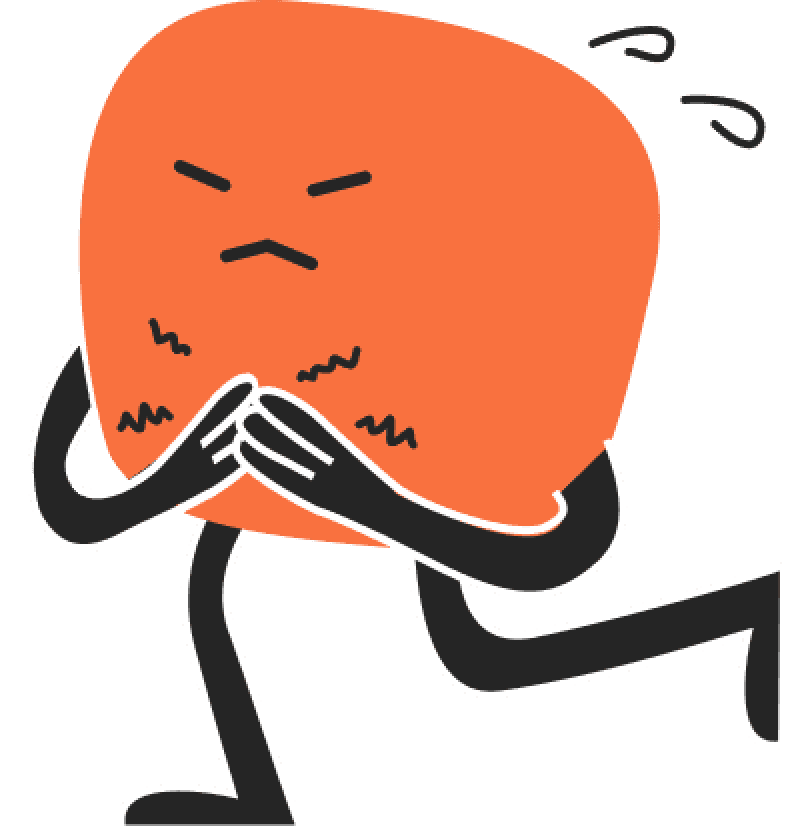


Apart from the primary colours and universal status indicators, I created illustrations that visualize different types of users to create a more engaging user experience, and to encourage user contribution in the product.
Final Design
GoAble helps users efficiently filter, locate, and navigate to washrooms that meet their specific accessibility requirements.
This utility combines intuitive navigation with crowdsourced data to alleviate the stress and anxiety of finding suitable washrooms in public, particularly for those with urgent washroom needs and mobility challenges.
Pre-Washroom Use
Browsing Options
Filtering
Viewing Details
Navigating to Destination
Post-Washroom Use
Rating: Positive
Rating: Negative
Account Settings / Add WC
Profile: Friends + Rewards
Lessons Learned
Simplicity is difficult
"Keeping it simple" and not over-designing is hard. I learned that using the least steps, visual cues, and words to communicate the core functions at a glance is crucial, especially for an utility app.
"Solve for one, extend to many"
Designing for niche user groups with varying priorities and needs was a challenge for me. Initially fearing that I might alienate general users, I learned through this project that designing a robust system with high flexibility grants a smooth user experience for all. So here I borrow Microsoft's Inclusivity Design Principle.
Resistance is part of solving complex problems
During our user research, we experienced reluctance from participants in sharing personal washroom experiences with us. By leveraging open-ended questions, and actively listening when participants disclose stories, we delicately navigated the social pressure in discussing sensitive topics and found valuable insights.